My Books

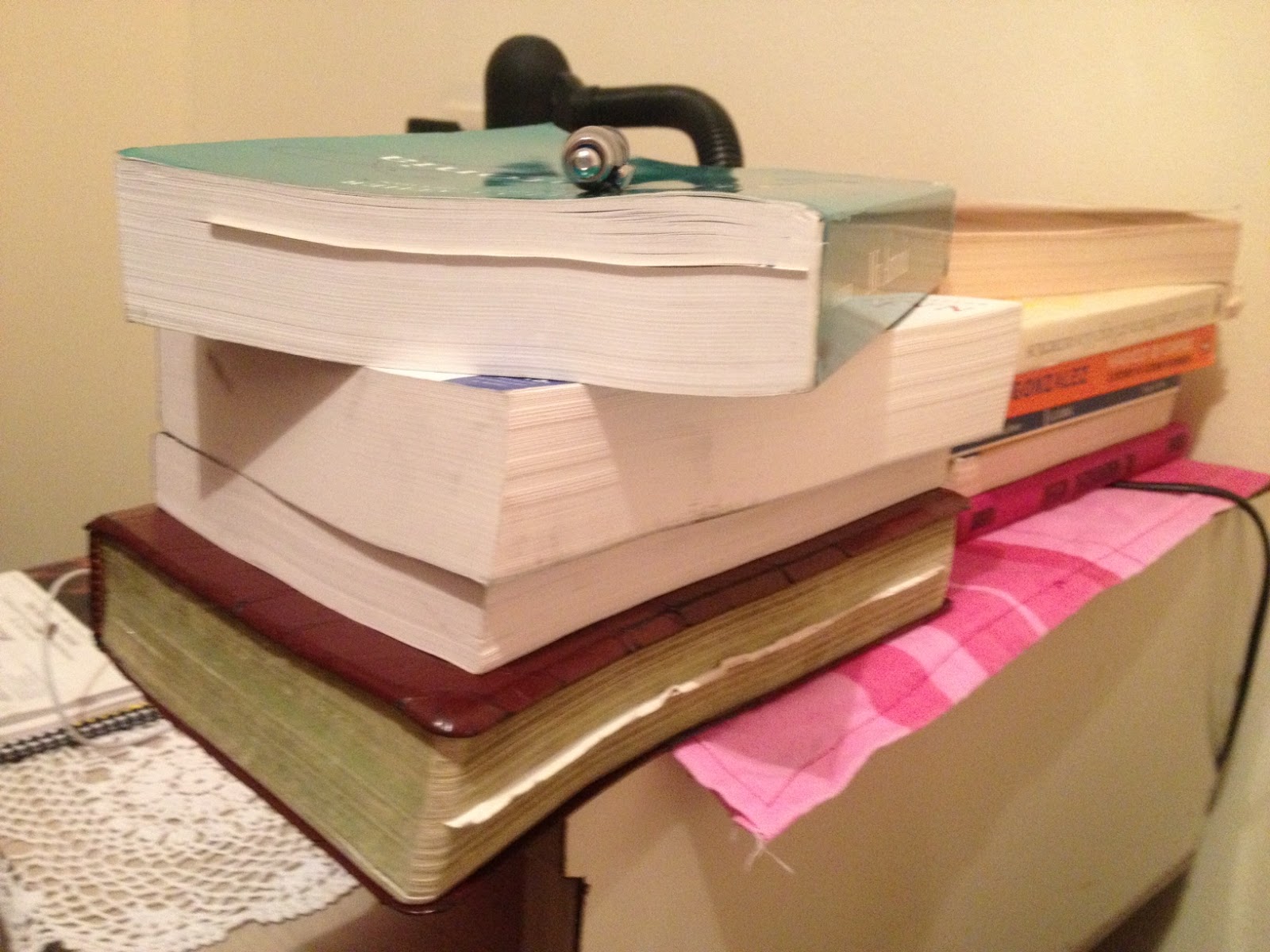
I’ve taken quite a few books to keep me company down here for the long, rainy nights and bright early mornings. There’s a good mix of fiction and non, but at this point in life I’m inclining more to the non side of the room. Some I’ve read and some are brand new. Some bought for the trip and some are borrowed from friends.

Listed alphabetically, these are my papered companions:
Bible
Is this a novel? Haven’t read it before.
Etymologicon by Mark Forsyth
I like words, and this book is an engrossing, labyrinthine history of them. So much fun. Words, you guys! I wish I could eat them. I have to stop myself from not reading this whole book in whatever sitting I am sitting down to read it for.

Godric by Frederick Buechner
A great, short novel of historical fiction about a 12th century hermit-saint who once went on a journey that changed his life. I haven’t read this one in several years.
Harper’s magazine two most recent issues. The newest does not have a Nebraska cover story, so make that only two of the last four.
Harvest of Empire by Juan Gonzalez
A history of Latinos in the United States as a result of the history of the United States in Latin America. A documentary of the same name will be screening this fall in Lincoln.
Listening to Your Life by Frederick Buechner
A daily reader with reflections on life, faith, and the mysteries of their union.
Memoria del fuego, 1. Los nacimientos by Eduardo Galeano
From the introduction (translated): “Latin America hasn’t only suffered the plundering of gold and silver, saltpeter and rubber, copper and oil: it has also suffered the seizure of its memory. From early on it has been condemned to amnesia at the hands of those who have repressed its existence.”
My Ántonia by Willa Cather
In keeping a promise to my dear friend Megan, who purchased this book for me on this very day two summers ago, I return to Willa. I hope it will keep me in touch with the prairie. (see bookmark above)
A People’s History of the United States by Howard Zinn
I’ve seen some of Zinn’s videos but never picked up his classic. The first chapter about the arrival of the English to the “New World” had me floored. The idea is to recount History from the perspective of the losers, and it is fascinating.
The Secret Life of Bees by Sue Monk Kidd
Loaned to me by a neighbor, I’ve heard a lot of this book and hope it will alleviate the eventual headaches that some of the other academic books will give.
I often wonder why I keep books around at all. Once I’m finished with them, shouldn’t they find other hands and eyes to give to? I’ve heard it said that old books are like old friends, and I suppose if I could shrink my friends and keep them in jars by my couch I would say that it would probably be enjoyable having that around as a piece of furniture.
For about two years I checked out books from the library, but I tired of it because I missed them when they were gone. I forgot about them more quickly than those I kept and could see over and over even though the years between us were many. I’ve forgotten mostly everything about Lolita and A Heartbreaking Work of Staggering Genius, for example. Those were two from that time period.
I really like to make my books mine, though, and not being able to underline or write notes in the margins about my associations and reactions made reading library books a handcuffing experience by their very nature. I couldn’t possess them or have any say about what they were saying.
Some people think that marking in books is some kind of betrayal, but if you ever borrow a book from me please-please-please mark in it all the livelong day. I want to see what parts you found interesting or inspiring and reread them for the interest and inspiration that I may have missed the first time. I love a book with several different pen(cil) colors with notes, circles, and underlines. In fact, when I look for an old used book, I look specifically on Amazon for the “acceptable” category of book (behind “very good” and “good”) precisely because most of those books are marked up by someone else.
I guess when I mark a book I don’t mean to make it my own: I mean to make it feel read. “There, there, book,” I say, “I’m reading you! [underlines something] See?!”

New Air

Thumbnail provided by MakeAThumbnail.com


My house has a patio that I read on most days. In the rain it is my place to watch the rain not make me very wet. I look at the rain making everything else very wet, and I say “not me today, rain! I am not very wet! Keep trying!” in my head so loudly that the rain would get really mad if it had a brain and if telepathy worked.
I’m in San Ramón now–day one is over. We arrived last night in darkness and drove through a dark that hinted at the deep greens that lie behind it. The students could tell in spite of the few lights along the highway that what lurked in darkness was quietly verdant. In other years we’ve arrived at sunrise when the greenscapes are as open to the world as our eyes.
I told one of the students to pay attention to the air when we landed, to that first whiff of Costa Rica. It’s a moment that, even if you’re expecting it, can really strike you by how unexpectedly new it smells. There is no smell, though. That word deceives in this case. Maybe “how unexpectedly new it breathes” is better. Yes, let’s go with that. It doesn’t smell new, maybe different, but it breathes new simply because you are breathing it and you are new in this place.
It’s not just the air, of course. It’s the palms, the Spanish flung skyward by so many around, the unfamiliar pattern in the cement, the dense rain-heavy night. It all accumulates and is breathed in during those first few breaths.
“You’re right–it does smell different,” she said.
“What I mean is: think of it like a lung might, not just a nose.”
“Oh, yeah! I see what you mean–it’s all so new!”
Yes, it’s all so new even down to this most basic thing of breathing air.
I remember stepping out in Spain on my first day several years ago. I was with a group of six other students making our dazed, half-lost way through the airport to the ground transportation area when we turned a corner and unexpectedly were thrust into Madrid. A road teemed with taxis, smokers, palms, and rushing people. I wasn’t expecting it, but I remember clearly how with a boom the sun hit me. I stopped in my tracks to take a breath, to breathe in the smokers, the honking horns, even the summer heat through my nostrils and into myself. I looked with my eyes, smelled with my nose, felt with my skin, but those senses were informing a deeper part still: my lungs.
Hwwwoooooooaaaaashhhhhhhhhhhhhhhhhhhh
It was a new country, a new continent, a new climate, a new language, and a new way of life. Beneath all of that, though, it was a new air.
We’re taking it in today.

On Losing and Finding

I am leaving home for seven weeks four days from now.

Before any large trip that I’ve ever undertaken there is always a moment, sometimes in a hallway, other times in the car or munching on a donut, maybe a familiar song comes on that launches a familiar dream only this time the dream I see is myself leaving the place that I am. Wherever day dreams catch me away to on the other days is a far different place than the one I felt swept away to today as I stood in the offices of my temporary job saying goodbye to co-workers.
“I am leaving home for seven weeks four days from now.” Earlier this morning, had I written that sentence, it wouldn’t have contained nearly the weight that it does as I stare at it now. Its reality has dawned on my week. The rest will be lived in its shine.
When I went on my first real roller coaster, I remember the moment I felt the harness snap into place just after which the attendants ran up and down along side the cars to make sure they had in fact snapped in. Against my fears and worries, I did not call out for them to get me out of there. I simply accepted that there were decisions, moments, dozens of them that had lead me to this, and if I were going to back out at any point it had better not be right before the thing I’d been saying I wanted to do was to happen. Stringing along events and dumping them, like people, would be a terrible thing to do to oneself (and others).
I’m ready for Costa Rica again. If I weren’t, the time to say so was December, not May.
What I felt in the office as I said goodbye was something like the sinking feeling of immediacy. Anticipation dies away and some sort of focused spirit saying “It is time” is born. I hadn’t let myself feel it until then–there was much work to be done leading up to it. Anticipation makes big events like this feel like they will always be far off, always “next month” or “next summer,” but one day you find yourself saying “next week” and your guts get kicked in by your own words.
Buechner talks of leaving home and the scrap of our heart that is left behind there. This scrap we know as homesickness when we are away from dear ones, familiar places, etc. This is why we say “I miss you” or “I miss that”. It is literally missing. It is a missing piece of the person we are when we are with that person or in that place. There is also the scrap of our heart that is sent ahead waiting for us to arrive where we will soon be present. That is the scrap that I felt leave me today in the office as I said, “It will be a lot of fun.” Future tense, but now much more immediately present. A piece of me left and now sits on the bench at the home of Doña Yolanda in San Ramón, Costa Rica. You can hope for the coming reunion if you prefer it to praying.
When people talk about finding themselves on journeys or travels, I am sure that they do not often mean it literally. I believe they literally do it, though, mostly without knowing.
If you see me before I go, you will only be seeing most of me. Whole me will be back in July. : )

Neighborings pt. 2

“WHERE THE HELL ARE YOU KIDS? HEY GET OVER HERE NOW!”

He’s got a shaved head, a muscular build and a tribal tattoo. I’ve got a bike helmet.

Instantly, I flashed back to my encounter with the Latino boys’ mother from Kids in the Alley. How do I look in this moment? Guilty? Have I done something wrong by talking to these kids? Should I keep my distance like “good neighbors” do? Why do I somehow feel defensive like I’ve been caught red handed?
Maybe I should have slinked away to my apartment, but I don’t believe in that. Instead I saw a chance to know another parent in spite of the again imperfect circumstances that prompted this meeting. I walked over to his yard with the kids as they were reprimanded for taking one step out of sight. As an explanation I offered, “They were just asking me about a bike that’s behind my garage. I don’t know whose it is, though.”
He looked at me with plates of food in his hands, maybe not hearing, so I continued, “Do these kids have bikes? I could try to find some kid bikes at the Bike Kitchen if they need some.”
Still not responding directly to me he seemed to soften and said, “Tommy, you need a bike don’t you?”
I reexplained that they were asking me about a bike that’s hanging out behind my garage and has apparently been there for a while. As he set down the food, still sort of evasive of my presence and his acknowledgement of it, I stepped forward and said, “I’m Aaron. I live up there on the second floor.”
He told me his name and vice-gripped my hand. I mentally buckled my chin strap. That was the last we said as I left them to their dinner.
Two days later I found him alone outside and he called to me, “YO!” (again with the yelling!) “I hope it’s OK but the kids took that bike yesterday since no one was using it.” It was OK. I have no clue whose it is or why it was in my yard to begin with; it certainly doesn’t belong to anyone in my house.
We talked for several minutes and I came to learn quite a bit about him. He was a railroad worker before his back gave out. He has an online business now and has mostly reinvented himself. Last year he took in a friend and accompanying children who were left homeless after domestic trouble elsewhere. He paid way too much money a week to rent a extended-stay room for them when his apartment got too cramped. He is back now but even moved himself out to give them enough space to live in his apartment when the extended-stay room became too costly. He said a hurried goodbye, feeling he might have bored me.
I guess what I needed to know, and probably part of the reason I wanted to meet this man, is because I knew deep down that he wasn’t just a man that yelled at kids. He had to be more complex than that, but The Man Who Yells was all he was going to be in my eyes unless I took the initiative to meet him.
The world is full of people that are not black and white, I believe. We are grey people. We exist, as my pastor likes to say, “in the already and not quite yet.” We are grey because we include darkness and lightness. We are not fully realized. Our histories are blurred with a swirl of dark and light times. They are not often in proportion either. My history is relatively light compared to many, so maybe I’m privileged to be able to feel this way about people. I’m not certain, but since I have the perspective I do I think it best to be proactive with it.
It’s planting season. See you out there in the dirt.

Neighborings pt. 1

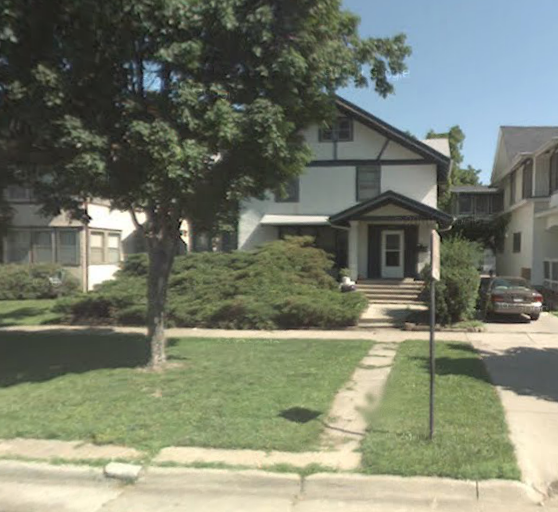
This is my house. Well, this is the house I live in. You see, I rent an apartment on the second floor just inside that door and up the stairs. It’s a pretty great apartment even if it doesn’t get many hours of sunlight.
Renting is limbo. It’s a big plant in a too shallow pot. You put down some roots, but mostly you hover, you squat legally, you lick a finger for the changing winds.
This is my first apartment living solo. It felt like the right time, and the right place fell into my lap next to the apartment of a friend and renting from another. The houses I’ve lived in have been great, and the people I’ve lived with have made them so like good roommates should. One thing that’s been lacking from those experiences may seem obvious, but now that I’m doing this solo renting thing I see its value: ownership. Maybe it’s because I chose this place out of my sole volition and free of other opinions to consider. I imagine homeowners have a greater sense of this, but in my place I feel for the first time that this is my house and my neighborhood.
This all stirs up a most basic desire of mine: to know and be known to fellow humans. As I wrote back in October, I’m reaching out for the first time into the lives I see around me. This is my street now. That is my alley and those kids are still there. They skate, they shoot imagined guns, they run over and ask/say: “Hey! That’s your bike!?” “Yes, it still is!” I say only the first part. A recent interaction with them occasioned a meeting of more adults.
“Do you have any boards to skate over?” said Sergio.
“You mean to ollie up onto?”
“No, we need to build a ramp!”
I didn’t think I had anything sturdy enough for anything like that. Plus, these kids don’t wear helmets, and so at the risk of being seen as too adult I chose to not have any boards that would work for them instead of tell them again that they need helmets.
“Is this your bike?” said a different kid, motioning to the alley.
I walked there and found a bike wedged between my garage and the fence behind it. It was about the right size for a kid of ten years, which I estimated this boy to be. As I was explaining that I didn’t know where it came from I heard a familiar sound: a man hollering.
He yells a lot, this man. I hear it through my open windows that look out over his backyard. I heard it in winter sometimes through his closed windows as I walked to the garage.
(imagine growling at high volume)
“WHERE THE HELL ARE YOU KIDS? HEY GET OVER HERE NOW!”

2012 Top Ten List

I usually write a lot about these, but there wasn’t time this year.

10. Menomena – “Moms” (emotionally battering)
9. Dum Dum Girls – “End of Daze EP” (great variety of songs in this succinct, cohesive statement)
8. Daniel Rossen – “Silent Hour / Golden Mile EP” (still the best part of Grizzly Bear)
7. Hot Chip – “In Our Heads” (bring your heart to the dance floor)
6. Beach House – “Bloom” (moody goodness)
5. Japandroids – “Celebration Rock” (keep pressing the gas into your 30s)
4. Ana Tijoux – “La Bala” (stunning, powerful, great wordsmith)
3. Spiritualized – “Sweet Heart Sweet Light” (tuneful, soulful)
2. Frank Ocean – “Channel ORANGE” (hard to stop listening to)
1. Fiona Apple – “The Idler Wheel…” (Fiona Apple-y)
On to 2013!

Mark DeMarco – "Ode to Viceroy"

Among my favorite songs this year that won’t make my top 10 albums was this slinky float trip of a tune. DeMarco ambles through a pleasantly simple (and simply pleasing!) verse-chorus at the pace of a Malkmus classic with drunken surf guitars and an anxious bassline. It makes me go all loose banana: limbs deboned, spine dangling forward, head faintly bobbing. I shake down to a puddle of goo at that guitar solo coda. What a world, what a world.

Kids in the Alley

There are some kids in my alley that play all the time.

It’s great. I park my bike back there in the garage, so I see them several times a week. They are, I estimate, between 9 and 12 years old, unselfconscious and whimsical. I’ve ridden by them several times on my way out of the alley, but a couple days ago I was out working in the garage and got my first chance to talk to them. They were skate boarding and throwing a football around (sometimes both at once) when one of them spotted a board in the garage that he thought would be a perfect skate ramp. Upon further examination, it turned out to not be a board but a piece of drywall–bad ramp. Seizing the opportunity, I made some little friends.

Sergio seemed to be calling the shots for the boys, so I asked him first. “Sergio!” “And I’m Fernando!” said the one who’s eaten the most in his life. “I’M ALEX!!” said one running from a couple garages down. The other I hadn’t seen peeked around the tree line: “That’s Juanito.” “Nooo, it’s JUAN!” he said in that “geeeez guys, cmooonnnn” whine that the runt of every group of boys has perfected.

I’ve seen them a few times since, and though I get the names mixed up a bit, I always talk to them for a few minutes before I go inside. They all speak perfect English with no accent whatsoever, so I’ve been intrigued about their home situation. Do they have bilingual parents? Do they have monolingual parents and have learned English so well through the school system? Today I found out…sorta. As I got home to put my bike away I heard Fernando running up behind me shouting a very obvious thing. “Hey, I know you!” He had a friend, an even runtier one named Frankie. They had just come from the store with Frankie’s mom, and they were waiting while she loaded the groceries from the car into the house.

I saw my opportunity to meet some parents. I started talking with them as we walked down the alley to their parking area when a little girl (3 years?) danced forth in a pink Dora coat. It was Frankie’s little sister. His older brother was helping carry groceries with the aid of his mother. She was an Anglo and carried a cellphone in one hand with a 12pk of CocaCola in the other. She hung up the phone as we approached, and motioned toward Frankie and me: “¿Qué haces hablando con gente que no conoces?” (“What are you thinking talking to people you don’t know?”).

I suddenly felt two-fold defensive: for me and for Frankie, who innocently had just made a new friend–not that his mom could have known that. I launched into: “Pero si nos conocemos de aquí detrás de las casas. Yo tengo mi bici ahí atrás y nos vemos muchos días, ellos jugando yo yéndome. Sí que nos conocemos” (But we do know each other from here in the alley. I keep my bicycle over there and we see each other a lot, them playing, me coming and going. We know each other).

It was a weird moment. She was confused (and white, remember). Fernando and Frankie were stunned. I had also just learned in that moment that Spanish was a part of their lives. It seemed like more than the five seconds that it probably was, but Fernando looked up at me, awed and corpulent. The words dripped out of his mouth like a leaky faucet: “You… you speak …Spanish? You… speak Spanish.  …?” “Yeah, I teach Spanish at the university. That’s my job,” I said loud enough for bilingual mom to hear. Fernando, still reeling, was doing the best he could. “Ok, so… what’s ‘FOUR’ in Spanish!” I laughed. He sorta laughed, too, realizing the silliness of his question in the face of the anterior.

I decided I should probably not push it, and mom was ushering them away, so I turned to her and offered an introductions olive branch. Her name was Shannon. She didn’t really change her attitude toward me, but it was probably a complex swirl of pride (at having been clearly understood in Spanish by me when she meant to communicate exclusively with her child) and utter confusion (at the prospect of meeting another white Spanish speaker right there in the alley talking with her kid). Her posture was distrustful, but her face was plain puzzled. She wasn’t being a bad mom by any means–maybe a bit presumptive–but we’ll get our chance to run into each other again. We’ll see how it goes that time.

Until then, those kids can expect me to take even more interest in them now. See you in the alley!

No Land’s Man

This article about Sudanese runner Guor Marial has been a small seed of thought planted in my mind for several days. It feels like it’s germinating now, so I’m going to try to unearth it roots-n-all to get a look at just what I think it means. This most philosophical swing of the bat hinges on a small part in a book I recently picked up by Slovenian philosopher Slavoj Žižek entitled Living in the End Times, in which Žižek postulates that capitalism and the global order it maintains are nearing an endgame. From there he draws on the five stages of grief as a framework to analyze our world systems, social realities, and ideologies. It’s been an engrossing read so far despite the excessive verbiage, but it is philosophy after all, I suppose.

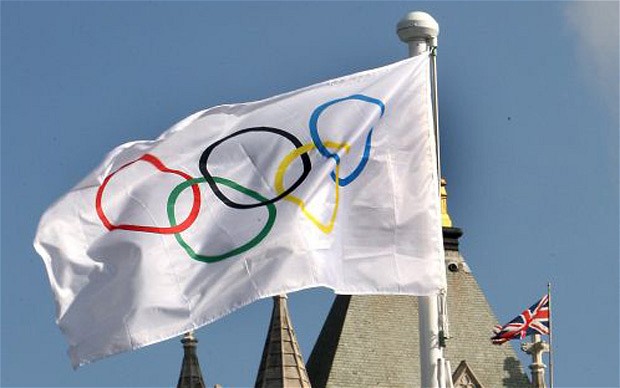
The headline of the article above contains the story: “IOC allows runner without country to compete in London under Olympic flag”. Well, the whole story is that this runner belongs to the infant nation of South Sudan, whose recent secession from Sudan is much too new to have established the proper Olympic body from which to authorize and send athletes. So, the IOC has determined that Guor Marial may participate in the Olympics without representing a country; he will instead run under the Olympic flag.

Because the IOC could have created South Sudan as a country recognized by the organization if it had wanted to, we can ask what reasons they may have for not doing so. I see a couple possible ways of reading this elision of South Sudan in favor of their own flag:

1.) Since Marial refused to where the flag of a Sudan that has seen dozens of his family members killed under its colors, the IOC could have denied his right to participate. They found a solution that maintained their established order (a country must have an Olympic body in order to participate) while allowing Marial to participate. This is one you might read in the news.

2.) “We at the IOC have resolved that the Olympics shall be your country, and the Olympic Village, your hometown. Your food, McDonald’s and your flag, ours. You are the embodiment of a bodiless, faceless organization that has waited decades for such an opportunity to both humanize and commercialize the WeAreTheWorld-ness of the Olympic Games.”


3.) It offers a sentimental story for the IOC to tout in the wake of their strange reticence regarding the 40 year anniversary of the 1972 Münich Games and its accompanying tragedy. The IOC has refused to acknowledge the tragedy in the opening ceremonies because they  fear backlash from extremists feel the need to “maintain political neutrality.” Marial’s story gift-wraps a sympathetic angle that will likely be covered in excess–certainly much more than the Münich massacre. Do you smell roses? That’s the IOC.

As I see it Marial embodies a non-entity at the Games. Bearing the Olympic flag contains the statement that he is at once from everywhere and nowhere. He runs representing sport for all men and women, but he is also a neutral, neutered participant in the world’s games–shackled and destined to represent only a void. Here, Žižek might cite the Lacanian moment when the “signifier falls into the signified,” or, when the word becomes indistinguishable from the thing it names or even gains supremacy over the object. If these circumstances have never happened before, is it possible that Marial is the first person in history of whom the words “Olympic athlete” are true in their fullest sense?

Warning: Slow Everything

This is TicaBus. TicaBus is not a company I have ever used, but TicaBus would like you to think that they go super fast. Look at that deer leaping up mountains and into valleys. This is all an illusion, you see, because in Central America nothing is done quickly, and more often than not things are done with almost deliberate slowness.
Monday I began my journey home. I travelled from Bocas del Toro, Panamá to San José, Costa Rica in boat, taxi, and bus. I travelled from Bocas del Toro to Almirante by water taxi. Once there, I travelled a total of 296km  in 11.5 hours. That rounds out to an average speed of 26kph (16mph). For comparison, I just returned to Nebraska by plane over some thousands of kilometers in 9 hours.
Let’s recap: eleven and a half hours at sixteen miles per hour.
I’d like this post to have a Adventure Excitement Against Time! tone as opposed to a #FWP Gringo Angst! tone, but the truth is I was one angsty gringo on Monday having rousted myself at 7:30am to finally arrive at the airport at 7pm. In those 11.5 hours of my life I changed in profound ways, by which I mean I devolved into a bitchy, angry, panicky American Tourist.
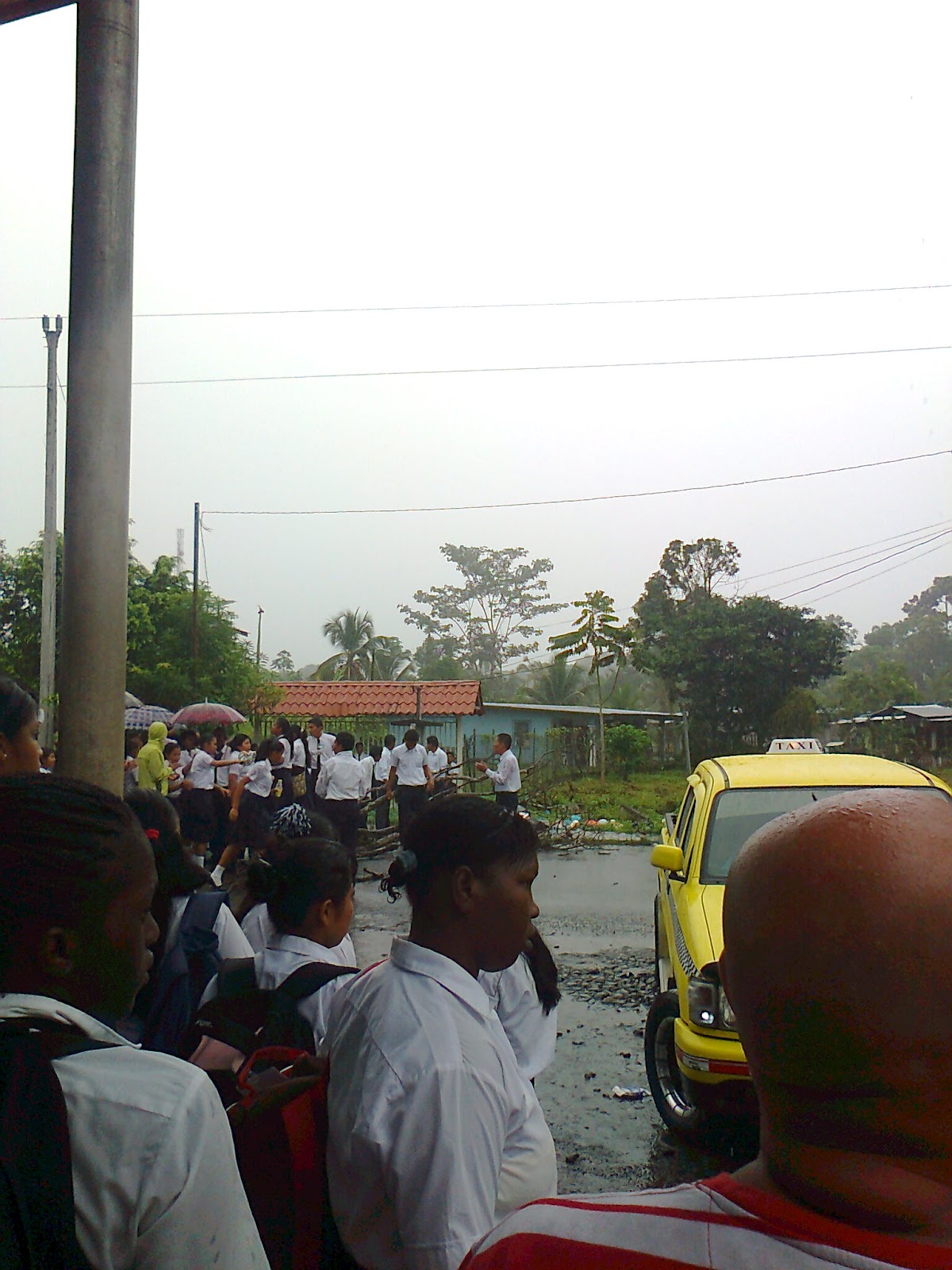
Interesting things were going on in Almirante, the gateway to Bocas del Toro. As soon as we docked, the tourist taxis began to usher us around saying they couldn’t take us to Changuinola (the departure city to San José) because of a strike. All I remember hearing was the word huelga (strike) over and over and something about the streets being blockaded. We arrived at the blockade to Changuinola at about 8:30am to find dozens of school children standing in the street among fallen trees they had dragged across the road. It was a downpour. They were chanting, singing, and dancing in the streets.
Students chant as others watch from under the bus shelter
Our taxi driver took the time to explain the situation: the local school didn’t have running water or electricity that day, and being this not an isolated occurrence, the children (ages 14-18, I would guess) decided to make their dire conditions everyone’s problem by blockading the only major road through Almirante and practically bringing the tourist mecca of Bocas del Toro to a standstill for the morning. Busses were backed up behind the intersection for blocks in either direction. Our taxi driver got us through the blockade by his deft having of two taxis–one he drove up to the one side and the other he had driven to the water taxi dock. We sprinted through the blockade and downpour in order to arrive on time for our bus to San José.
Once aboard the bus, the next big hurdle was customs at the border. Going through the border upon entering Panamá was not unlike the early computer game Myst. The world is unknown to you, and you must rely on your insight along with tiny clues to find your way through a dream-labyrinth. No exaggeration. Panamá customs had four doors, two windows, and three buildings. You needed to go to one building, one window, and then one other door. You would think signage (or simply 1, 2, 3 ordering of buildings/doors/windows) would aid this process, but you would be lost, wrong, and probably crying. The only help we received was from our future taxi driver, who’d seen enough troubled gringos flounder up and down, flailing their passports at every open window and door. Somewhere, I thought, there must be a table with a bottle marked “DRINK ME” so that I would be able to shrink down small enough to fit through the real customs door at the foot of one of these windows. Then, the cake afterwards, saying “EAT ME”. Normal size, giddyup!
I have digressed. We were returning through the same three-door circus we met on our way in, only this time with 30 needing to pass before we were allowed to move on. At the passport checking line things were moving extraordinary slowly. When I finally approached the window, I could see that the passport checker was being handed bundles of passports to stamp from drivers of private transportation. They pay a little money, they get ahead of the line. Ours were only checked once there was a break in the flow of these private drivers. This came after waiting in the line for 15 minutes only to find out we were in the line for the wrong window of the wrong buliding and we actually needed to be going in the door in the last building first. Imagine my joy when the men in this third building began to laugh at us for not knowing where to begin our process.
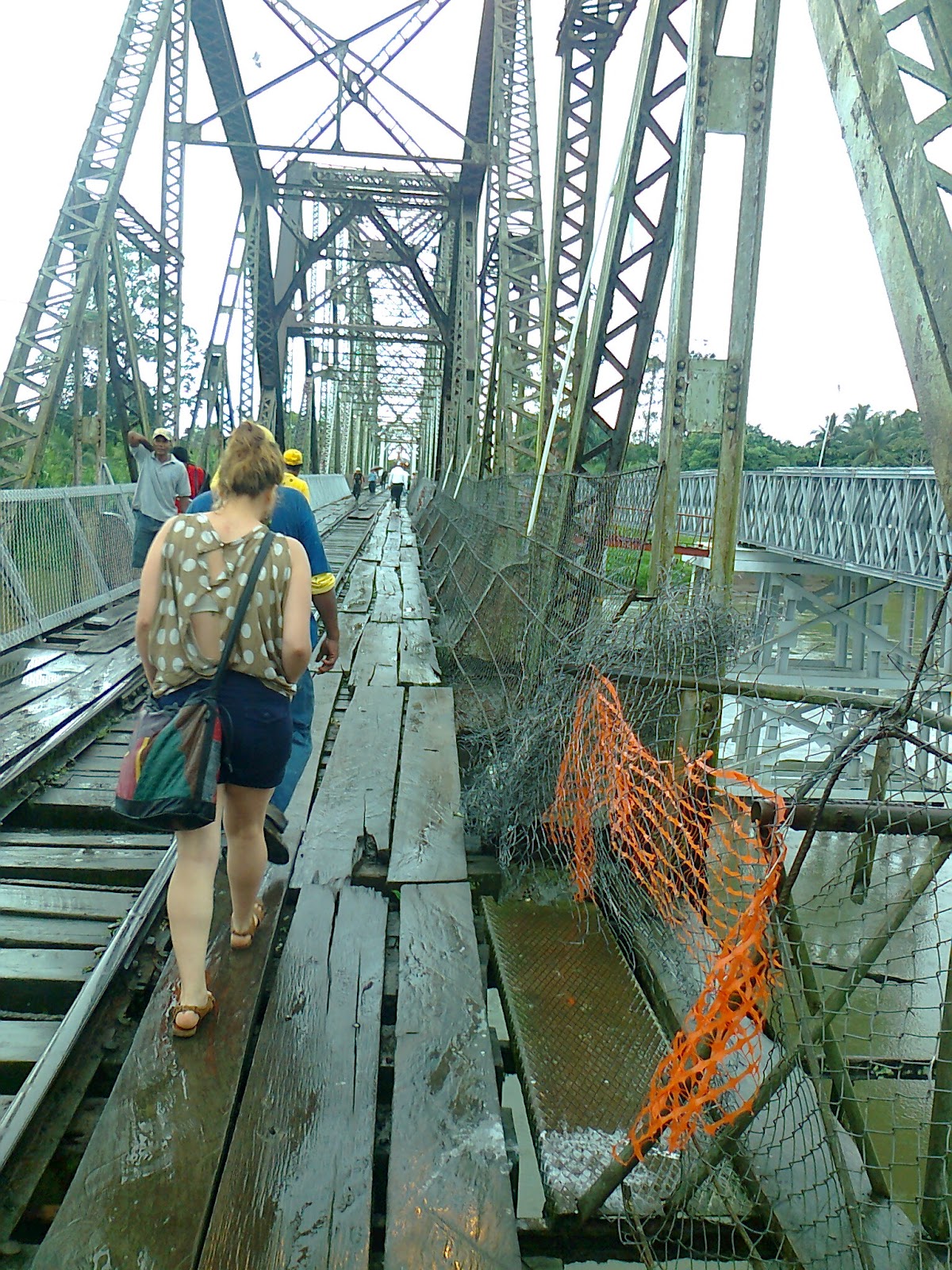
Back to window number one we went with the pay-as-you-go passport stamper. After getting stamped, one must walk across a bridge between Panamá and Costa Rica. This is that bridge:
It was a slippery 1/2km walk over the river. Finally, at the Costa Rican customs window (which seems to have about 33% more understanding of how to accommodate unfamiliar sheeple) we waited for the final stamp that would release us from the white rat race. There I found a defining moment of Central American life speed: with more than 30 people waiting in line behind me, the agent took my passport and declaration, scanned the passport, looked over the declaration, checked the boxes, stamped and signed my passport. He then handed me my pa–he then realized he was getting a text message on his iPhone, so of course he held my documents in one hand while typing with his thumb a two-paragraph reply. Misspellings? Just backspace and try again. Autocorrect error? Shuffle through the possibilities til you find it. After 30 seconds I offered, “Con las dos manos más rápido, no?” (“It’d be faster with both hands, right?”). He smiled and kept going. I was finally reunited with my documents a short time later.
The horn, the horn, the horn is so forlorn.
The trip moved swiftly through Caribbean towns Sixaola, Puerto Viejo, Limón, and then inland through Siquirres and Guápiles before our next major obstacle. A trucker pulled off to the side of the road yelled ¡Ehtá cerrao! (“It’s closed!”) as we approached the ascent of one of the most notoriously dangerous sections of Costa Rican highway that passes through the mountains of Braulio Carrillo National Park north of San José. Due to heavy rains and low visibility on tight corners, this heavily trafficked pass is often a pileup waiting to happen. So it was this afternoon, yet we ventured forth anyway rising about half way up before we joined the creep-n-stop rhythm of the rest of the semis, cars, and buses. Over the course of the next two hours some dozen ambulances went up and down the mountain. We had heard there was an overturned semi but never found evidence of this if there was one. My panic reached an all time high when I realized that without cellphone reception in the mountains I was handcuffed regarding the plans I had made to reunite with my luggage at the airport. The initial plan made early in the morning was that my generous maleta hosts would would meet me at 7:30pm at the airport for the handoff. I was two hours deep into a traffic jam that could potentially delay my arrival for much, much later. My travelling company, Sofi, made it easier to not fly into cursing rants about the former passengers of cars that began to populate the highway while they waited. She did well to stonewall my outrage at the growing claustrophobia of time.

All told, I arrived at the airport at 7:15pm. The descent to San José went much more quickly than I expected, and life returned to a manageable level of anxiety when my maleta bearers also brought gallo pinto and a thermos of coffee to send me off with one final, full Costa Rican meal. There were more hurdles on the way, like a 60 minute window in Denver to get to my next flight while also rechecking my bag and passing through customs and security again (they took my peanut butter! not a liquid!), but I now find myself among the comforts of home and no worse for the wear. Slowness has its advantages, but experiencing such a heavy dose of that reality in the 24 hours before I had to fly home made me miss the pace of life here (or at least the multiple lanes on highways).
I had a wonderful evening last night with my favorite friends in Omaha, Kim and Jeremy. I rode my bike to lunch with others today. High summer in Lincoln is upon me.