My Favorite Albums of 2010 (1)

I’ve made it a small new year’s resolution to blog more here – and about other things besides music. However! This is the fun time of year that I get to delve into music nerditry and talk about why certain albums made my ears have a great year. This has taken the form of a top 10 list, but in reality it’s nothing more than an ordered catalogue of music that has worked its way into my life, invariably but somehow staking a claim on how I experienced 2010. Here is the first installment:
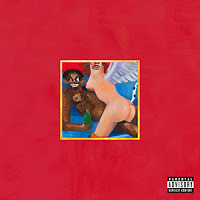


10. Kanye West – My Beautiful Dark Twisted Fantasy
“Huh? -Actual thought as I read all the year-end lists from magazines, e-zines, friends, etc. So many of them had Kanye on top. Admittedly, I kinda despise the guy, but I guess we probably all do just a little bit. He’s like me in a lot of ways, and that scares me. So despising him makes me feel as if I have control over those things. I picked up this album half out of morbid curiosity and half out of genuine hope that it was awesome. Well… It took a few weeks. Immediately, “All of the Lights” was a favorite, as well as “Who Will Survive in America,” a brief segue track that features some passionate/bizarre Allen Ginsberg-esque poetry reading, but I left it there: content to be unimpressed. Something happened though: I started to like MORE of it. If you know me, you know I’m not into the rap/hip-hop that much. Even the most classic of the classics in the genre have probably never graced my ears. So there I was stuck in a car with people that wanted to rock this album all the way to Colorado (eight-hour drive from Nebraska), and somewhere along the way I let me guard down. “Lost in the World” was allowed to sound its anthemic YAWP in my ear, unobstructed by my resistance. Putting this album at 10 on the list is not simply a token acknowledgement of an album that so many others have praised. I experienced it and loved it in my own way.


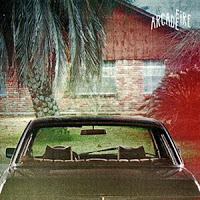
9. Arcade Fire – The Suburbs
Arcade Fire became, through Funeral and Neon Bible, many people’s favorite prophets of the 21st century apocalypse. On this record, as Win Butler has alluded to, the band seems to step back a bit from the exasperation of earlier albums. I hear what Butler means when he says that this album is simply meant to be “from the suburbs,” and not a critique of them. There is less satire here, less irony, and this translates to more earnestness, happily. “Modern Man,” among others, communicates adult paranoia in more personal and less political ways, and Butler’s quivering vocals have never sounded quite so hopeful and helpless as on the title track: “I want a daughter while I’m still young / I want to hold her hand, show her some beauty before all this damage is done / But if it’s too much to ask… / Send me a son.” It feels like Arcade Fire is ageing well. It’s easy to forget – probably because of the emotional and critical weight of the previous two – that The Suburbs is only the third major release from the group. As an evolution of the riotous passion that Arcade Fire is capable of expressing, this album sees them move inward toward the more personal – away from overindulging the socio-political. For me, the inward turn produces some of the more poignant expressions of the corporate experience of suburban life. Artistic success does not lie solely in how convincingly the subject is rendered, however, so it’s to their credit that they’ve conveyed that subject through this great collection of songs.


Highlights: “Ready to Start,” “Modern Man,” “Empty Room,” “We Used to Wait,” “Sprawl II


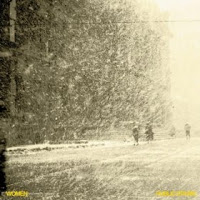
8. Women – Public Strain
Haha… OOPS! I put a song from this album in my not-top-10 list! I know. That was before Women completely took over my iPod, car stereo, computer and the musical part of my brain. You must blame them for this! The first time I listened, I thought, “I loved one song (see previous post) and was bored by the rest.” I heard a voice saying, “Give it some time, Aaron!!” “…OK VOICE!” I said. And, then, two weeks later: “Good GOSH, thank you, voice!!!” The thing is, I dont’ think my first impressions were all that off; there isn’t a lot to grab your attention here, honestly. But slowly, surely and unintentionally, I started to hear things I liked – no, wait… – loved. First of all, I hear so many other artists I love throughout this album: Sonic Youth (“Drag Open”), Embryonic-era Flaming Lips (“China Steps”), Strokes (“Locust Valley”), Velvet Underground (“Narrow with the Hall”), and Television (all over). But Women hold it together and are able to forge their own sound from these parts. The guitar interplay is one of my favorite parts, as the crunchy hooks seem to surface form nowhere. In much the same way, melody bubbles up somehow from the seeming a-melodic, and the atonal reveals its tonality. Much like the album cover, it’s a blurry, dizzying blitz of noise, but there’s still living breathing people behind it all if you care to pick them out.
Highlights: “Heat Distraction,” “Drag Open,” “Locust Valley,” “Venice Lockjaw,” “Eyesore
A close few that will miss the cut this year:
Gorillaz – Plastic Beach
Vampire Weekend – Contra
Tame Impala – InnerSpeaker
Girl Talk – All Day
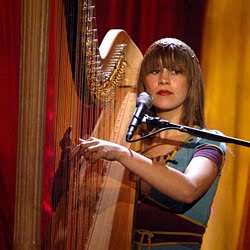
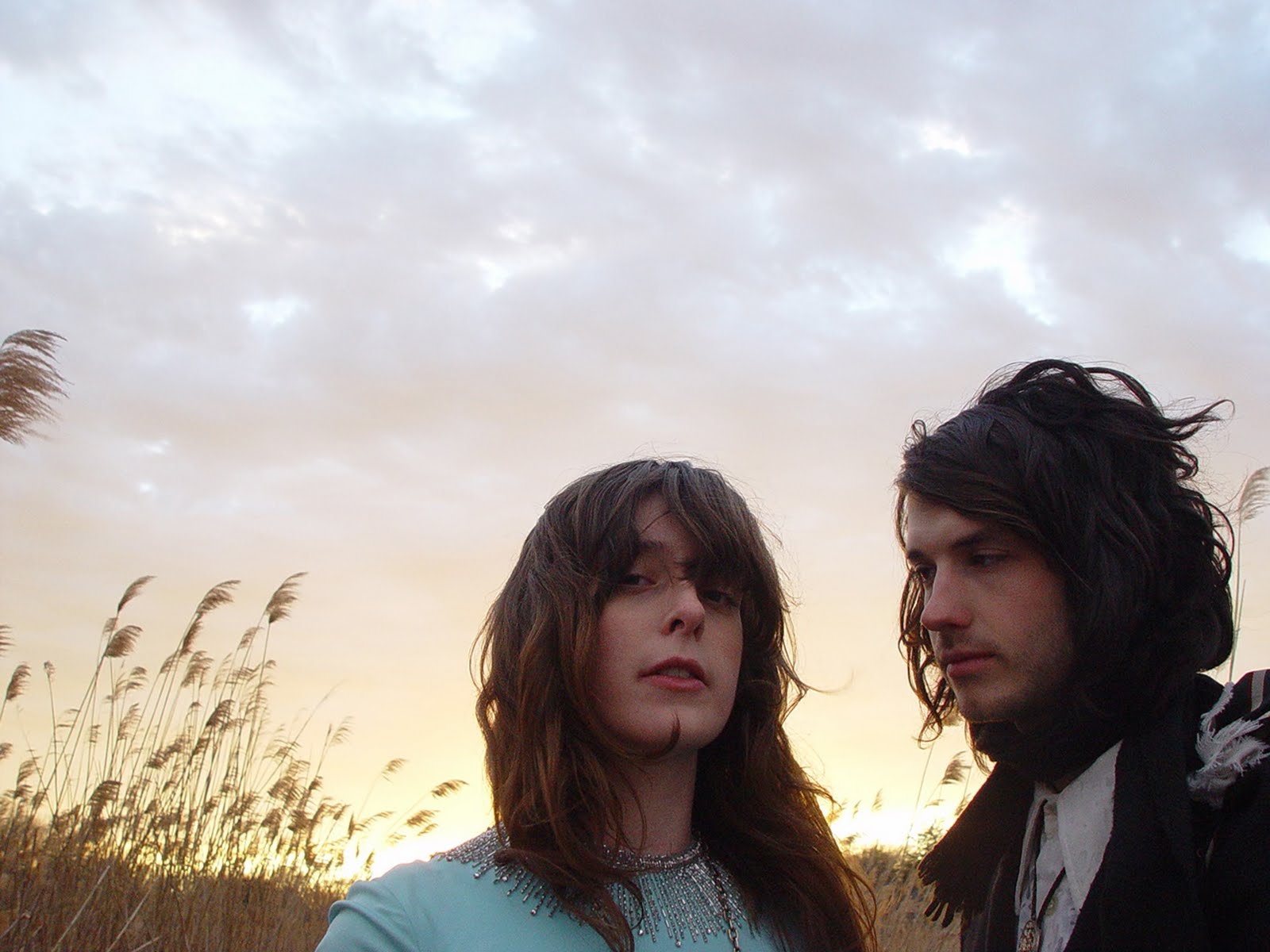
Favorite songs not on a top 10 album of 2010 (4)

A couple more songs from great albums that aren’t in my top 10 list:

Joanna Newsom – “Baby Birch

Beautiful is not a sufficient word for Joanna Newsom’s Have One on Me; it’s too broad. Beauty wears many faces. For example: “Baby Birch,” although beautiful, is devastating. My chest caves in four inches, my head falls: “This is a song for baby birch,” she welcomes. Be ready, my heart, you will fall farther, sigh heavier: “I wish we could take every path / I could spend a hundred years adoring you / Yes, I wish we could take every path, / because I hated to close / the door on you.” Some have speculated that the song is about abortion or a stillborn child. Could be. Regardless of the subject matter, it’s still a “nine-minute-ache” – to borrow a description I’ve read. Indeed, it has haunted me at times with the weight of its sadness. Although difficult to digest in its fullness I’ve known early on that this was a superb album, and “Baby Birch” fills me with so much of whatever it is filled with that I cannot deny how often I have carried its weight with me.

Liars – “Scissor

The song’s basic plot: man finds body, man drags body to the car, body awakens. Liars have always seemed to gravitate toward the grotesque, but even when this is not their theme they manage to spread their dementia through the music. Take “Scissor,” the first track from Sisterworld. Here’s a song that, regardless of lyrics, would still sound fearsome, cowering and ominous. The minor-keyed chorus of falsetto-ed harmonies that opens the track is exposed as sinister by the lower, quivering octave. Even Billy Corgan opted for that softer, lace-thin voice at times, but it was rarely mistaken as a voice of comfort. So it is with Agnus Andrew. By song’s end, he’s the boogeyman once again, howling in the corner: “When I saw her blinking eye / she was a-LIIIIIIIIIIIIVEEEE!!!!” “Scissor” gave me chills all year. So did the excellent video.

Favorite songs not on a top 10 album of 2010 (3)

Take a listen to these tasty treats:
Beach House – “Take Care
This album ultimately suffers the fate of being left out of the top 10 because I lost track of which songs were which after so many listens. As albums become more familiar, their parts should become more distinguishable in my mind somehow. In Beach House’s Teen Dream, but for this nitpicking, I found a highly enjoyable listen, and “Take Care” was immediately and remains my favorite track from the album. Unfolding from simple verses, I’ve described the chorus as the birthing of a musical thought the song had been pregnant with since the first note. It’s a wonderful climb, and one that you can almost sense coming. Often those moments that can be anticipated musically fall short of their anticipation, but this one surprisingly fulfills as the mood and music swell to reach the altitude of Victoria Legrand’s bounding melody: “I’ll take care of you / if you ask me to”. Anticipation: fulfilled! One of the better album closers I heard; one of the better songs I remember hearing.
Andrew Bird – “Master Sigh

I have to check myself here, because Mr. Bird’s Useless Creatures was available beginning in 2009. It didn’t receive its own release, though, until this October, which was when I first made its acquaintance. It’s terrific meditative music to lazy away any afternoon with, curled up with a book or fast a-study. Bird’s work has grown increasingly farther from my tastes in recent years since 2005’s brilliant The Mysterious Production of Eggs, but with this sparse release, I’m beginning to believe again. “Master Sigh” introduces the meandering orchestral strolls of Useless Creatures quite well while indulging in a swooning melody accompanied by his patented whimsical whistling. Soon the string section pulls up the blankets, drifting into and over the tranquility, weightless and floating off into nothing. It’s breazy, airy and charming. More of this, please, Mr. Bird. Plz.
More to come! Top 10 albums list coming early next week!

Favorite songs not on a top 10 album of 2010 (2)

Yeasayer – “Ambling Alp

What a thrill this song was the first time I listened! The other times, too. The first listen with headphones was even more dizzying. The album didn’t live up to the promise of this, its first single, but geez I’d be satisfied to have recorded a song this sonically affecting. It almost elicits a physical response from me as a listener. I shake my head violently as the main thrust swoops in, mimicking in any way I can the thrashing and throbbing; I bob and skip to the chorus’s charge: “Stick up for yourself, son / Nevermind what anybody else done.” The sentiment fits well, but it will always be the maddening, chaotic rush of the first minute that brings me back to this song over and over.

Favorite songs not on a top 10 album of 2010

I enjoyed too much music this year to limit myself to a top 10 albums list! So here are some songs that made my year better but would be left unacknowledged in the top 10 albums format because the album they appeared on will not make my list. The song titles will have links for your (and my!) listening pleasure. Let us not grow weary of discussing/hearing/dissecting music!

Sufjan Stevens – “All Delighted People

Of the three epic, 10-minute plus tracks that Suffy put out this year, only one truly affected me. “Djohariah” loses itself in cronky soloing for several minutes, and “Impossible Soul” loses my interest at the first instant the autotune creeps in. This one, though, Sufjan got right, and wonderfully so. From the chorus of ladies behind him, to the fitting tribute to and/or repurposing of Simon and Garfunkel’s “Sound of Silence,” to the variety of melodies that find their way out of the progressions, it is marvelous and thrilling for all 11+ minutes.

Women – “Eyesore

On the strength of several tracks this album was close to making the top ten, so there is much more here than one song. “Eyesore” is a monstrously disjointed jangle, snaking through sections that seem melodically unconnected, which stand in for verses that eventually give way to the rockin’ finale its been stowing away all along. The dissonance and atonality in some of the album’s tracks is close to intolerable – if not at least confusing – but when they put their minds to it, Women are capable of utilizing these more distancing elements to enhance, stimulate and draw nearer. This is apparent on the album’s closer, “Eyesore,” the most affecting song on their album Public Strain, and my favorite album closer of the year. I can’t get enough.

More to come!

On clothing

Colossians 3:12 …Clothe yourselves with compassion, kindness, humility, gentleness and patience.

It occurred to me this evening that clothing may be an under-examined aspect of a.) the human experience, and b.) the bible. Mostly the latter has interested me. So I thought about it:
Adam and Eve, if we are to take the book’s word for it, fashioned clothing in a last-ditch attempt to hide the shame of the reality that they were human. The first humans, in the very moment they became human, found their most pressing need to be that of clothing – of a covering for what should not be exposed. Was it not also a shield between their real selves and the world that they now understood? Was it not a shelter from all that wounds and, therefore, did they not ultimately see themselves as the first wounded ones?
I have selected a verse above that also encourages clothing, but this kind is more ethereal. If this is the “clothing” we are encouraged to stretch over our heads and tuck in around our waists, what of the clothing that we shed? Earlier we are urged to shed “all such things as these: anger, rage malice, slander and filthy language…” We clothe ourselves also in these things, I wager, because in our minds they do quite a bit better at protecting us than mercy or humility ever could. I shield myself from others with pride; I am ruthless and grace-less because these qualities shield me from my shame, from nakedness. They keep me from seeing the mirror; they keep others from seeing inside me.
What if we put on these new clothes, then? How can I be shielded by gentleness, kindness, compassion? Are these not attitudes that make one vulnerable, more accessible instead of defensible? Which is the natural clothing?
We clothe ourselves, if it is up to us, with that which will shelter, protect and cover. Following the line of Adam and Eve, who taught us well, we cower behind malice, blind hatred and cynicism. Shame cowers there, too, and it is not exposed for its cowering. Our shame, which is that we are failures, that we are those lost flounderers who lay at the mercy of the world, is too much to bear exposure. We brace ourselves against that harshness with our own version of it, but inside are we not still beating hearts and wide, blinking eyes before it all?
Putting on new clothes, then, seems a kind of re-veiling of that vulnerability in such a way that it exposes us to all. And yet, in the end, all are also exposed by it. All who will receive that compassion, mercy, and kindness must too perceive their own selves as they are.
New clothes, transparent clothes, and now, finally, we have become who we were all along.

My LOST Finale reaction/analysis

There are few experiences that can draw out that classic “life flashing before one’s eyes” kind of sensation. I think those are some of the more telling and extraordinary moments of life because they lend a perspective to our daily monotony that we otherwise fail to see. When Michel de Certeau speaks of being lifted to the summit of the now nonexistent World Trade Center, he senses that he is transformed from pedestrian into deity. He says,

One’s body is no longer clasped by the streets that turn and return it according to an anonymous law; nor is it possessed, whether as player or played, by the rumble of so many differences and by the nervousness of New York traffic. When one goes up there, he leaves behind the mass that carries off and mixes up in itself any identity of authors or spectators. An Icarus flying above these waters, he can ignore the devices of Daedalus in mobile and endless labyrinths far below. His elevation transfigures him into a voyeur. It puts him at a distance. It transforms the bewitching world by which one was “possessed” into a text that lies before one’s eyes. It allows one to read it, to be a solar Eye, looking down like a god.

The perspective that De Certeau experiences up on high affords him the capacity to disconnect, to survey the vast, unconscious mass of urbanity that spreads out before him. It is from this perspective that I found myself seeing my life’s course after having just watched the series finale of LOST.

[minor spoilers ahead]

Leading up to the final episode, I had, as many of my fellow LOST-watchers did, a checklist of the points that needed to be cleared up – the mysteries or questions left unresolved. Gladly, however, my cynicism and/or critical appraisal of the show (they are indistinguishable at this point) was overcome by the true fabric of the show: its characters. Some mysteries were left unsolved, like why Widmore want The Island so badly, why Desmond’s resistance to electromagnetism actually mattered, why the characters were able to see through their time/space into The Island’s, etc. Throughout the finale, I found myself fully be-goosebumped and sweating, but it wasn’t because of the mysteries that they were finally revealing: it was any number of characters being unveiled to each other — Sawyer and Juliet find each other, Hurley finds that he matters as much as anyone else, John Locke and Jack Shephard flip through their past like a picture book that recalls their ideological irreconcilability as they sat in the hospital post-op.

The characters gained a perspective not unlike the one that De Certeau describes from on high: they saw back through their past and felt all of its latent significance wash over into their current lives. I felt drawn into that kind of washing-over, as I, too, have seen 5 years of my own life pass watching this show (I watched the first season on DVDs). People have come and gone from my life since then. I have let new people into my life just as much as I have, unfortunately, lost others that were once friends or loves to the past. For only about the last hour of the finale and in the brief time since then, I sat on high with De Certeau and surveyed my life’s last 5 years, its changing elevation, its ebbs and flows, the doors that have opened and closed again, and the allegros and largos of the past that has made the present what it is. I recalled memories long since forgotten that flashed back into consciousness. I felt like, for the first time in a long while, I could see the broad scope of my life in all of its shifting colors – with both the past and future in frame. As De Certeau puts it, “Perspective vision and prospective vision constitute the twofold projection of an opaque past and an uncertain future onto a surface that can be dealt with.”

These two realities exist in LOST too: the previous episodes are the opaque past from which many tried to project an uncertain future of answers and solved riddles. This duality often drove the plot of LOST and the desire to understand its mysteries. Would the questions be answered later? Would earlier mysteries find their appropriate reflection in the answers of later episodes? What I concluded as I watched the last chapter unfold in what some will doubtlessly call (and not for unfounded reasons) an unsatisfactory ending is that the characters were the ones that ultimately needed reconciliation – not the mysteries. Hurley needed to fulfill a purpose precisely so that his life could feel purposeful. Benjamin Linus needed to find forgiveness for his conscience’s sake, but also for our sake – so we would know how to see him in light of all he’d done. John Locke and Jack Shephard needed to hug – with all their past quarrels in perspective. Tears needed to be shed between separated loves Charlie and Claire, Hurley and Libby, Sawyer and Juliet, Jack and Kate, because these were the driving forces of the show’s drama. Science fiction would be dry without such human elements as love, hate, envy, acceptance and loss. Star Wars was driven by Luke’s relationship to his father, Han and Leia, and the forces of love/hate as much as any creative idea about Death Stars or space battles. And so with LOST, the characters’ relationships were given the final word, because the peace they found with each other and with their experiences was the most important question that had been left unanswered.

For what it’s worth, that character reconciliation is what finally fulfilled my enjoyment of the show. It allowed me to put to rest my expectation of explanation. It left me looking back into my own life for the need of reconciliation that may one day find its way to me. It helped me look down from on high and see my life for the “fathomless mystery that it is” – as Frederick Buechner as put it. I don’t want all of life’s questions answered either, because, really, who has the time to sort it out? What I do want is reconciliation and peace with others, and a point from which to view my life in all of its colorfulness. If that’s what I can gain, the mysteries can continue to rest in peace for all I care. At the end of the day, the most important artistic creations, to me, are the ones that turn my eyes inward and let me look at myself anew. LOST has been a marvelous work of art to me in that sense.

favorite albums, 2009 version

10 – Grizzly Bear “Veckatimest”

Aside from the disappointment of hearing the best two tracks from this album months before its release (“Two Weeks” and “While You Wait for the Others”), this album was highly anticipated in light of my number one album of last year (Grizzly Bear side project Department of Eagles). Too much anticipation can do as much harm to my reception of an album as four year-old iBook G4 speakers (they sound terrible). This album didn’t seem to capture the moody range of “Yellow House” or “In Ear Park”, but its baroque pop songs did contain enough goodness for me to include it on this list. I won’t listen to any advance singles from the next album, I promise.

(listen here)


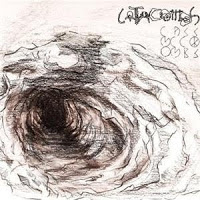
9 – Cass McCombs “Catacombs”

Having recently developed an appreciation for 2007’s “Dropping the Writ”, I was excited for this stripped-down version of McCombs’s songwriting. He’s got a great ear for melody, and I was particularly happy with the evolution of his lyrics into clever, memorable capsules such as: “You’re not my dream girl, you’re not my reality girl, you’re my dreams come true girl” on the opener “Dream Come True Girl.” There’s much more clever musicianship and word-working to be had here on “The Executioner’s Song” and “My Sister, My Spouse” among others.

(listen here)


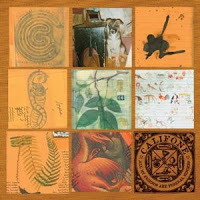
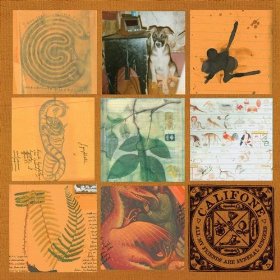
8 – Califone “All my friends are funeral singers”

(See earlier post on this blog)

(listen here)


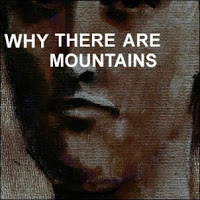
7 – Cymbals Eat Guitars “Why there are mountains”

As my friend Jeremy said: “I like any album that goes for epic in the first 15 seconds.” It was easy to just listen to “And the Hazy Sea” over and over as if that were the only track, but this band’s not-so-subtle mixture of Modest Mouse, Built to Spill and Pavement pays dividends throughout these nine tracks. This was one album that I knew instantly would make this list for the sheer go-for-broke nature of the opening track, but I found much more to like in the familiarity of the music heard through its influences. Sometimes “derivative” doesn’t mean reductive.

(listen here)


6 – Atlas Sound “Logos”

Last year’s Deerhunter album really stuck with me, so it’s not too surprising that I have found this album (from their side project) so enjoyable. Bradford Cox seems to be more interested in the ethereal tendencies of Deerhunter, and here he exploits them as the album drifts between proper songs and more airy, un-tethered pieces: “The Light That Failed”, “An Orchid”, “Kid Klimax”, and “Washington School” could be loosely classified as the latter. The central six or seven songs of this album help to anchor its more ambient pieces in the solid earth of songwriting. Unsurprisingly, Noah Lennox’s (of Animal Collective) collaboration on “Walkabout” make it a standout, along with “Attic Lights,” “Shelia” and “My Halo”. As on last year’s “Microcastle,” “Logos” is another hazy Bradford Cox-related release through which the more structured songs shine through brightest.

(listen here)


5 – Phoenix “Wolfgang amadeus phoenix”

These songs are nearly too polished, almost too robotic, but it’s this seemingly unfeeling pop precision that makes every melodic twist cover a remarkable emotive range. Phoenix gave me an album of shrink-wrapped pop that I will return to often. The one-two punch of “Listomania” and “1901” could be the best openers of the year, and the wave of hooks keeps rolling through all nine tracks. It’s nice to have an album like this once a year: tight, melodic pop-rock.

(listen here)


4 – St. Vincent “Actor”

There is a wonderland of sounds and songs to behold here. With Annie Clark functioning much like Lewis Carroll’s Alice as both protagonist and wide-eyed wonderer, the listener is welcomed into this world and cautioned that his/her surroundings may be unsettling. The monster that reveals itself to be lurking beneath the niceness of “The Strangers” emerges in the darker second track, “Save Me From What I Want”, and finally pushes through in the third, “The Neighbors”. Clark has said that she wanted the guitar to act as a dark monster that arose from beneath the songs to overtake them. It works quite nicely to this effect, threatening to destroy the carefully constructed pop song when it enters in “The Neighbors”. It soon takes over in “Actor Out of Work”. The titles of the tracks also point to this darkness and paranoia that consistently overcome Clark’s more poppy tendencies: “Black Rainbow”, “Laughing with a Mouth of Blood”. I’m happy to have heard this album. It contributed some dark wonder to the year: pop music is to be feared.

(listen here)


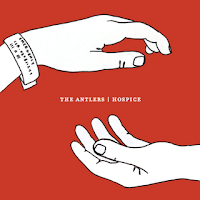
3 – The Antlers “Hospice”

One Saturday morning in the fall, on the whim of a good review, I downloaded this album expecting to be overwhelmed by tragedy. I was, and I continued to be. Loosely inspired by the singer’s personal experience, the music of this album is well suited for its storyteller aim – especially for the weight of the tale. It remains unclear exactly what relationship the characters have, but through each somber melody and slow-building climax, cancer, death, pregnancy and dread are each given their voice in the narrative. The highs and lows of human tragedy are what make this one of the most openly autobiographical albums I’ve ever heard. For that, and for its restrained, meek lows and emotive, explosive highs, “Hospice” will be an album marked in my mind for the singular impression it left on me.

(listen here)


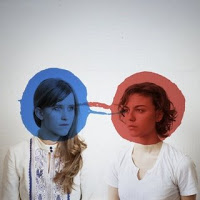
2 – Dirty Projectors “Bitte orca”

1 – Animal Collective “Merriweather post pavilion”


I have tried to discuss how the special qualities of these albums are related in an attempt to understand how they produce such similar reactions with such contrasting musical landscapes. Both albums are fairly avant-garde and do not shy away from their intentions to shock-and-awe the listener. “Bitte Orca” erupts with “Cannibal Resource”, an anthem that does well to announce the kind of labyrinthine pop suites to follow. The harmonies fly in from left field, the disjointed guitar riffs shift between “rawk” and artful noodling, and the warbling vocals do little to calm the album’s barrage of aural vertigo. Not unlike “Bitte Orca”, “Merriweather Post Pavilion” also wants to transport the listener to another world via its sound-scape. When I listen to the pulsating sense of life that this album gives off, I hear trees; I hear wind, rain and the entire range of the primitive, organic and vibrant world in which I live. The same basic musical palette that Animal Collective has employed for a few albums is made new to me with lyrics that reach much deeper into the human experience (see: “Also frightened” and “Bluish”, especially). This album is a complete body of work in much the same way that “Bitte Orca” is, but whereas BO is a disjointed rollercoaster ride of hooky and harmonic amusement, MPP is more coherent, more cohesive, and because of that, more complete in my mind. My bottom line is: “Bitte Orca” sounds like it belongs in a museum with other pieces of fine art. It deserves to be appreciated and gawked at by the masses for its outlandish pop constructs. “Merriweather Post Pavilion” never lets that visceral, soul-seeking part of me into the museum: as much as I try, I always end up running outside to experience the instinctive allure of the world.

(listen here to BO) (listen here to MPP)

Well, that’s all for this year!

El ingenioso hidalgo don quijote de la mancha

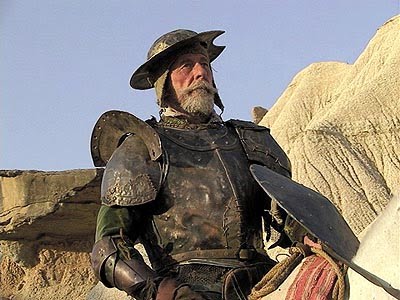
well i’m almost done reading El Quijote for the second time this year and i think it is a super duper book. the fact that its two parts were written in 1605/1615 respectively was never the most exciting aspect of the book when i approached it years ago for my first attempt at reading it. this time around i’ve had much more fun, many more laughs and have seen much deeper into what don Quijote represents as a literary figure for me.


just to set the stage a little: don Quijote sets out at the age of 50ish to change the world by restoring the lost practice of chivalric knighthood, along with his reluctant squire Sancho Panza: (rough translations will follow) “to go throughout the world with his arms and horse to find adventures y to behave in such a way as to imitate all that he had read that the former errant knights did, righting every class of injustice, and putting himself in occasions of danger so that he would earn eternal fame.” whoa, DQ, take it easy!

so for most of the book he’s a comedic character. he thinks windmills are giants and so he attacks them, unsuccessfully. he thinks an innkeeper is the lord of a castle and thus he has found a worthy man to bestow him with the office of knighthood, which the innkeeper happily and laughingly does. he challenges a charging herd of sheep to a duel only to find that they were not the great army that he had seen approaching. as he lay trampled and toothless, he reminds his squire: “you must know, dear sancho, that it is a very easy thing for these enchanters that pursue me to make anything appear to be anything else. this evil enchanter who pursues me, envious of the glory that he saw to be within my grasp in this battle, has turned the enemy legions into flocks of sheep!” lol, DQ!

the thing that really gets me about DQ is not his comedy of errors, although there is constant fodder for laughter here — just after the herd tramples him, sancho asks, unsure:
“how many molars do you normally have in this part of your mouth?”
“four!,” responded don Quijote, “except the wisdom tooth, all are whole and healthy.”
“look carefully what you say, my lord,” responded sancho.
“i say four, if not then five,” responded don Quijote, “because not in my whole life have they taken a tooth or molar out of my mouth, nor have any fallen out from infection or lack of care.”
“but in this part below,” sancho said, “your mercy has not more than two molars and a half; and in the part above, not even a half, not even one, it is all as flat as the palm of my hand.”
“what awful luck!” cried don Quijote, hearing the sad news that his squire gave him, “i would have rather they tear off my arm, as long as it would not be my sword-weilding arm.”

lol, Qui-hotes!

anyway, the thing that really gets me is not DQ’s comedy of errors, it’s who he represents. and who he represents for me is a man with ideals, beliefs and hope who ultimately fails to see any of them realized. don Quijote is a tragic figure who embodies the tragic figure in all of us who, though we cling as tightly as we must to our personal idealism and the things we believe to be true/just/right/holy, may find that those things are ultimately never realized completely. he is a personification of the tragic human condition of limited vision. yet, beyond that tragedy, there may be a rejoicing in our ability to believe passionately and with assurance something that we are as yet unassured of. through the character of don Quijote, i see that faith is at once one among the strongest and weakest of man’s instruments to relate to the world around him. with it we may gird up our convictions and motivation for living (as el hidalgo DQ does), but by it we are ultimately left flailing our sword against a deep, dark madness.

its a tragic, beautiful madness, though, if you ask me.

califone

i like a lot of bands, it’s true. there aren’t a lot of constants over the years in my 10 favorite albums lists. i guess that’s because a lot of bands come and go. many make a great album and then fall off of my radar (see …Trail of Dead, Clap Your Hands…, and others). but there are bands that transcend their musical production and actually manage to influence my life in some way. among these bands i can only count The Flaming Lips and their world-embracing appeal. that’s pretty much the only one that really moves me beyond the music and words. Wayne Coyne is the perfect weirdo whose genuine humanity is so apparent (and who seems most transparent) that it becomes difficult if not impossible to fall in love with the guy and his band.

but i’ll add Califone to that list now. since 2004’s Heron King Blues, i was pretty attracted to Califone’s kitchen-sink brand of folk rock. so dusty, so dirty, so mangled and yet, when the heavy fog of noises dissipated, there were moments of music so affecting in their mood and sound alone, that i didn’t mind the 15 minute jams of garbage can percussion and reserved noodling on any number of what seem to be rusty string-ed guitars.

nothing could have prepared me for 2006’s Roots and Crowns, though, which placed number 7 in my 2006 year-end list (which, in hindsight, is way way too low). since then, the album has become a staple in my rotation, and i am certain it will land on my decade’s favorites list coming at the end of this year. there’s something that draws me into their world of imperfectly-tuned instruments, matched with varied and always erratic percussion, all united under tim rutili’s rusty, world-worn crooning that keeps me listening. i have a hard time not listening actively to Califone anytime i play them.

if i were to put my finger on it, i would say that when i listen to Califone i feel like i’m hearing a band that expresses what for me is “soul music”. i don’t mean that in the sense of the genre “soul”, rather in that i sense that a lot of soul has gone into the music – and that this music connects with my soul as a consequence. lyrics like “in the morning after the night i fall in love with the light” from “The Orchids” (even though it was not written by Califone) contrast with the a-typically more cryptic “the carnival fighters are sharing a bed tonight bruised in the hay” on “Spider’s House”. but both of these lyrics are sung with Rutili’s downcast sincerity and both acquire the same amount of significance.

now, with 2009’s “All My Friends Are Funeral Singers”, Califone have added another very strong album to their catalogue. they don’t sound different and that’s just fine with me. they practice the same restraint as always, tucking away some of their more precious melodic gems into 20 or 30 seconds of 5-minute songs (see the piano’s entrance toward the later half of “Giving Away the Bride”). it’s this restraint that i think keeps me most interested as a listener, as i am regularly bowled over by melodic passages that creep into songs in ways that are totally unforeseeable. to use a completely random but applicable analogy, Califone makes order (melody) out of chaos (their own chaotic musical structures) in the same way that Brian Phillips (of http://www.runofplay.com) talked about Barcelona making order (beautiful fúbol) out of chaos (22 men running around a field chasing a ball). Califone’s disruptive and often odd musical styles make their moments of clarity, melody and beauty that much more clear, melodic and beautiful.

it’s good to know that some music isn’t just music that sounds good to me: some of it reaches deeper.