RAMROD 2015

Climbing to Paradise
Nearly one month has passed since RAMROD (Ride Around Mt. Rainier in One Day), so this writeup has been smoldering for a good time.
Training consisted of mostly casual rides of up to 70 miles. I’ve long encouraged other riders attempting great distances that if they can ride half of it comfortably they can ride the full distance. “All you need is more food, water, and time,” I say. It’s a helpful little distillation, but I had major doubts throughout the summer when putting it to the test. I remember sitting down for a beer with Josh Rice in Lincoln about 10 days before the ride when he said something very true after I elaborated on my training plans for when I flew back home the next day: “It’s too late at this point. You’ll either have it or you won’t.” I shuddered a little. He was right!
Here are my field notes from the ride:
1) Mile 1: Enumclaw High School has views of Rainier from afar. It’s startling to think you’ll circumnavigate it from that vantage point.
2) Mile ~33: I spoke with a construction worker who was holding a two-sided STOP/SLOW sign on a section of highway. He was grizzled, bearded, and wearing sunglasses; we were stopped for about 3 minutes there. I started asking him about his job, and eventually he explained with bewilderment that they get no respect. He said he stands there for 8 hours with no bathroom breaks and no relief for lunch. I was dumbfounded. I always wave at these people or ding my bell but don’t seem to get much response back from most. Maybe I understand why now. After hearing that I stuck out my hand and said, “Here’s the respect you deserve.” He shook my hand, laughed, and flipped the sign to SLOW.
3) Mile 58: Two food stops behind us and rolling hills through chilly, foggy valleys and sunny vistas. This is the park entrance and the start of the climb to Paradise. A couple miles before I popped some Ibuprofen to push back at pains surfacing in my seat and right foot. More pills at 3 hour intervals probably saved my day.
4) Mile 73: Atop Paradise the mountain is staring you in the face. The road points down as far as one can see from here.
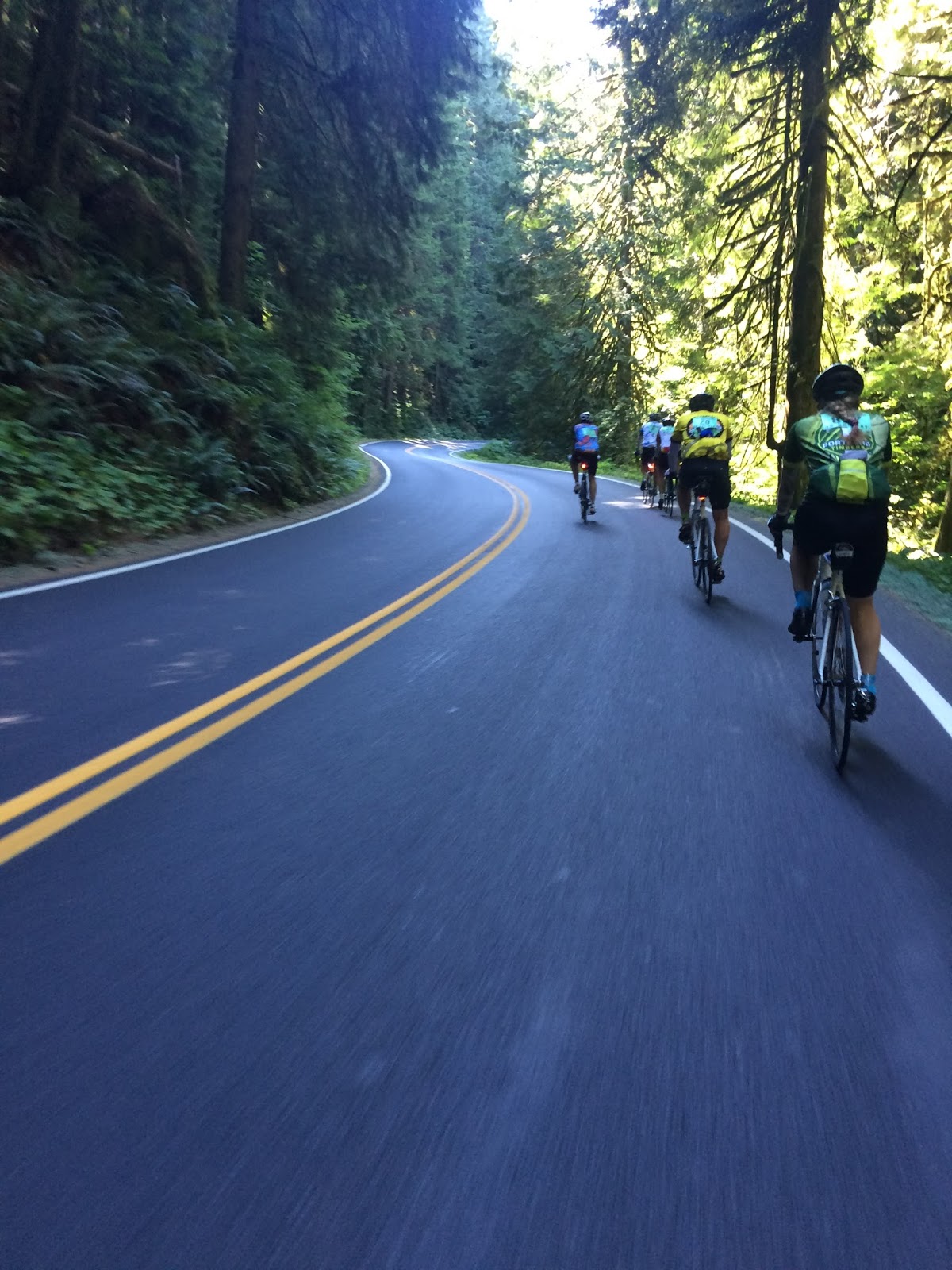
5) Mile 86: The descent is unforgettable and worth the entire day’s suffering. Imagine sitting on a 35mph office chair for half an hour as it wraps its way around stunning summit views, lakes, hairpins, and rocky ledges. 15 miles up to Paradise took 2 hours; 13 down, 30 minutes.
6) Mile 93: I wasn’t aware Cayuse Pass had started. I was crawling along at 6-7 mph for about 45 minutes before I realized I had reached the water stop halfway up the pass. That was a great feeling, because I was almost out of water. Pain in my right foot was now very intense, so I took a couple more pills. I noticed the pain had developed from constantly reaching down on my right side to pull out my water bottles. The repeated movement of angling my right knee out was forcing most of the resulting pedaling pressure to fall on my smaller toe bones of that foot.
7) Mile 100: The bummer about reaching the top of Cayuse Pass and knowing it’s all very literally downhill from there is Cayuse Pass is also where the headwinds start. So even though you have essentially 50 miles left of 2% grade downhill, you’re never able to hold a steady 18-19 mph like you would expect. Instead, you have to slog through the wind at 14-15.
8) Mile 126: I waived at some people in lawn chairs on the side of the road thinking it was fun that they were out there watching people ride. About 5 miles later as I reached for water bottle #2 I realized that the final water stop and that I would ride the final 20 miles into the wind and in the hottest part of the day without reserves. Very shortly thereafter I got a left hammy cramp and had to get off the bike to stretch. I had about 8 ounces of water left, so I dumped 4 Nuun tabs into it to create some delicious electrolyte sludge. I got back on the bike but didn’t make it another 100′ before another cramp wave struck. I drank my sludge then, I stretched, and I hoped for the best.
9) Mile 144: The best happened. A policeman directing traffic offered me about 4 more ounces of water and encouragement that I was there at the final turn off the highway into town. I made it to the home stretch of curvy downhill roads back to Enumclaw and the high school.
10) Mile 150: I bunny-hopped across the line and almost took out one of the volunteers needing to retrieve my electronic tracker. Ha. I heard the announcer saying something about having had too much sugar. He wasn’t far off–all those caffeinated Nuun tabs! Then it was time for a shower and sharing of war stories with my fellow REI riders.
When morning came the next day I had a fun moment looking out the window in my kitchen at the mountain. It looks totally different now. I know it. I know around it. I know behind it. I know on it. It appears less imperious to me now and somehow less huge. It’s not that it was brought to my level; I ascended to it. This is a key point, I think.
Having attempted and finished rides approaching RAMROD before (150 miles and 10,000 feet of climbing), I had a decent idea what to expect. Gravel Worlds in Lincoln, NE is 150 miles and about 5,000 feet of (mostly rolling) climbs. Knowing this, my training was probably still insufficient. I kept thinking to myself, “Those extra 5,000 feet will be tough, but it’s road not gravel!” I wasn’t all wrong as it turns out. I certainly had some dark spots on Cayuse Pass, the third and biggest climb of the day beginning at mile 93. I definitely missed the final water stop had those cramps as a result. But overall, I think I felt more beat up by Gravel Worlds. I’m fully willing to believe that the fact that I knew I could do it was enough to make RAMROD feel like less of an achievement than Gravel Worlds, a race I had serious doubts about finishing in 2014.
Here is the route. Notice the profile below, too. Green is speed; brown is elevation change.
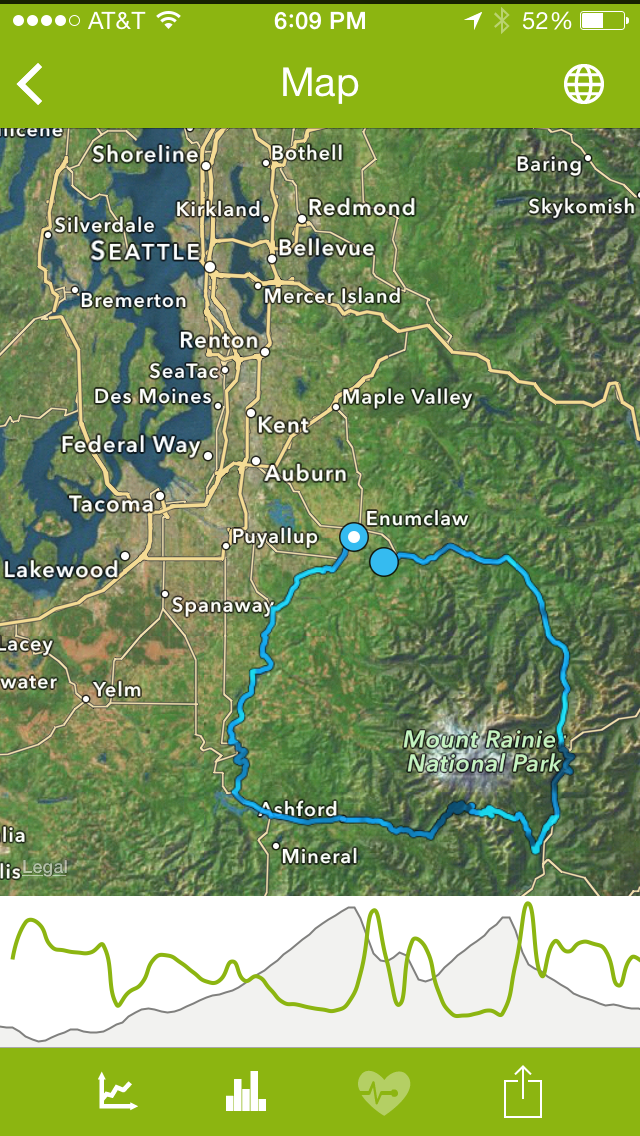
Phone died 6 miles from the end

Holy Candor

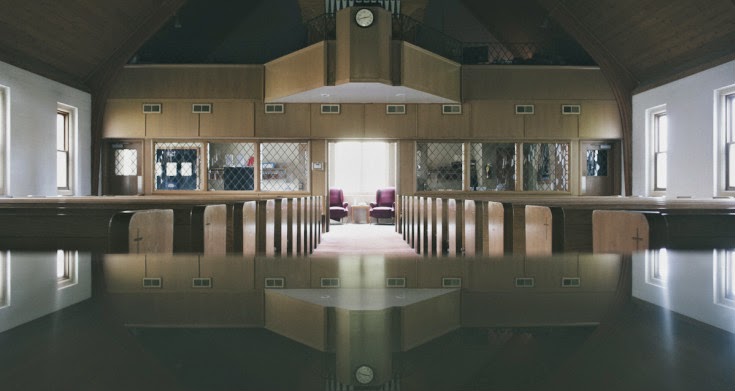
My thoughts on Grace Chapel and why it is holy, candid, and special:

First, there are elements that make it feel instantly homey. There is coffee, there are donuts, there are pews–snuggle in!–and there are children scampering about. Second, there are spoken reminders that the adventurer, the new face, and the wanderer all belong, and soon they discover that they have never been new at all. We know them and they know us; we are them as they are us. Third, there is humility from the pulpit, balm for the church-sick. This iconic place of brow-arching disapproval is instead a display case for the humanness we all know and share. Finally, there is an understanding that our fears, joys, and poverties are not separate stories but one, and that in their telling is the rest of burdens released and born together.

And now a point by point explanation:

1. The Geneva House, where coffee and donuts are provided, serves as a buffer zone where less than comfortable newcomers or attendees can acclimate to the environment. To me, this is a foretaste of the later, more deliberate meal we share together. They are elemental to setting the mood because they provide immediate familiarity, and not least importantly because they travel with us to the sanctuary. Yes, there are greeters saying “Good morning!” but first there is the unspoken “Good morning!” of drink and food–the first family meal. If you are new and anxious, at least you can cling to a coffee mug.

2. As a partner to the candidness of traveling mugs of coffee, the service always begins with an acknowledgement of just how challenging it is to wander into a new church followed by a hearty voicing of support for such adventurers. This underscores one of the other essential mood pieces of Grace: the intentional airing of realities we know to be true of us. Church is tense if you’re new. No reason to quietly hope new people don’t feel the tension–instead, there is explicit permission to feel it and also to be encouraged in the midst of it that you are, in fact, brave just for being present.

3. I’ve yet to forget one of the first times I attended when I heard these words come out of the pastor’s mouth in the opening prayer: “…forgive the sins of he who preaches, for they are many…” It may have been the first time I felt like the pastoral voice ever partook in the spirit of the Lord’s Prayer with us (“…forgive us our debts…”). If we preach and believe that heaven and earth are being made one, it only follows that we should strive to make pulpit and pew level with each other. It took 25 years for me to feel like a pastor existed on my plane, a pulpit on my earth.

4. This final piece is the least tangible of the four elements I’ve tried to summarize, but it is the most essential for what I mean by “holy candor”, which is the phrase I’ve arrived at to describe the general tenor of this place. A chapel is a humble, unassuming place, and inside this particular one there is a sense we are wholly sacred when we are able to be wholly human. The human story, which is to say your story and my story, has sanctity. Its strands are individual but undivorceable from one another since together they stretch, tie, and tether us to the ultimate reality. Without the blending of each individual life’s colors, we paint a pale picture. Thankfully, as I wrote in the previous paragraph, those in positions of leadership are both shepherds and the first to put their strokes to canvas.

Addendum (four months later):

I arrived at “holy candor” because a question was posed to me about the essence of Grace Chapel. After reflecting for some time I feel it encapsulates the sense of the people and practices of this dear place. I realize much of it is quite rosy. Everything is not perfect, though, and Grace would be the first place to say that. Some of it is idealized as I look back on the last eight years, but all of it comes from what I felt there then and even more acutely now as I search for a spiritual home here in Seattle. There is holiness because there is Great Presence. There is candor because there is deliberate frankness regarding who we all have been, likely are now, and God willing can become some day. Together, there is this “holy candor” I have tried to articulate.

Not-Too-Late Favorite Albums of 2014


Against Me!, Transgender Dysphoria Blues

A devastatingly honest and challenging listen. Think Japandroids but with something to say. The only album in a long time I would dare call important. (Helpful history) Favorites: Transgender Dysphoria Blues, True Trans Soul Rebel


AJ Dávila, Terror Amor

A crass, bravado-driven Latin rock album served with a pinch of doo-wop soul. Favorites: Ya Sé, Es Verano Ya


 Caribou, Our Love

Dan Snaith does it again with this slow-burner of a dance/pop record. We’ve all seen time-lapse video of flowers opening for spring. Now we’ve heard it. Favorites: Can’t Do Without You, Dive


D’Angelo and The Vanguard, Black Messiah

A timely return for D’Angelo and some of the most chewy-delicious vocals I’ve ever heard. Favorites: Till It’s Done (Tutu), Another Life


Deerhoof, La Isla Bonita

I always thought that eventually I wouldn’t need new bands, that the bands I loved would keep making music and I would keep loving it. This has proven true for very few groups (Caribou is one, Spoon another). And here is yet another collection of wonderfully twisted guitar pop nuggets ranging from the ANIMAL SMASH variety to the more noodley odyssean type. Always sounding uniquely themselves. Favorites: Exit Only, Mirror Monster

Mac Demarco, Salad Days

Another cache of tuneful albeit crooked jams. “Let Her Go” could be his best song to date. Favorites: Let Her Go, Blue Boy


Spoon, They Want My Soul

The most consistent rock band on the planet. Favorites: Rent I Pay, Do You


St. Vincent, Digital Witness
While the live show alienated me a bit from the Annie Clark I loved, that was the point of the expressionless Clark’s newest dare all along: to shed too much light on our modern acts of performance. Favorites: Birth In Reverse, Prince Johnny

Favorite Songs (Not Albums) of 2014

Todd Terje – “Johnny and Mary”
Absolutely not too long at six and half minutes. The slowly constructed warmth of warbling keys, a breathily sung story, and cautious percussion eventually settle into an electro Chariots of Fire groove that is given about four and a half minutes to crest, crash, and sink away back into the sand.

Ariel Pink – “White Freckles”
This is the only song from Pom Pom that approaches former favorite album of 2010, Before Today. It’s as weird as it is fun as it is musically confounding. Video game glam.
Ariana Grande – “Love Me Harder”
This is the kind of radio pop one often dismisses as an instant Forever 21 playlist classic. Yet, hear that chorus, hear those fluttering “Ooooos” and the space they give the song’s perfectly stuttered synths to shine. Blissful pop, perfectly paced.
TV On the Radio – “Happy Idiot”
Even on imperfect albums, they always seem to put out at least one song to stand alongside such career highlights as “Wolf Like Me” and “Staring at the Sun”.

RMR Vol. 2: More from El Centro de la Raza

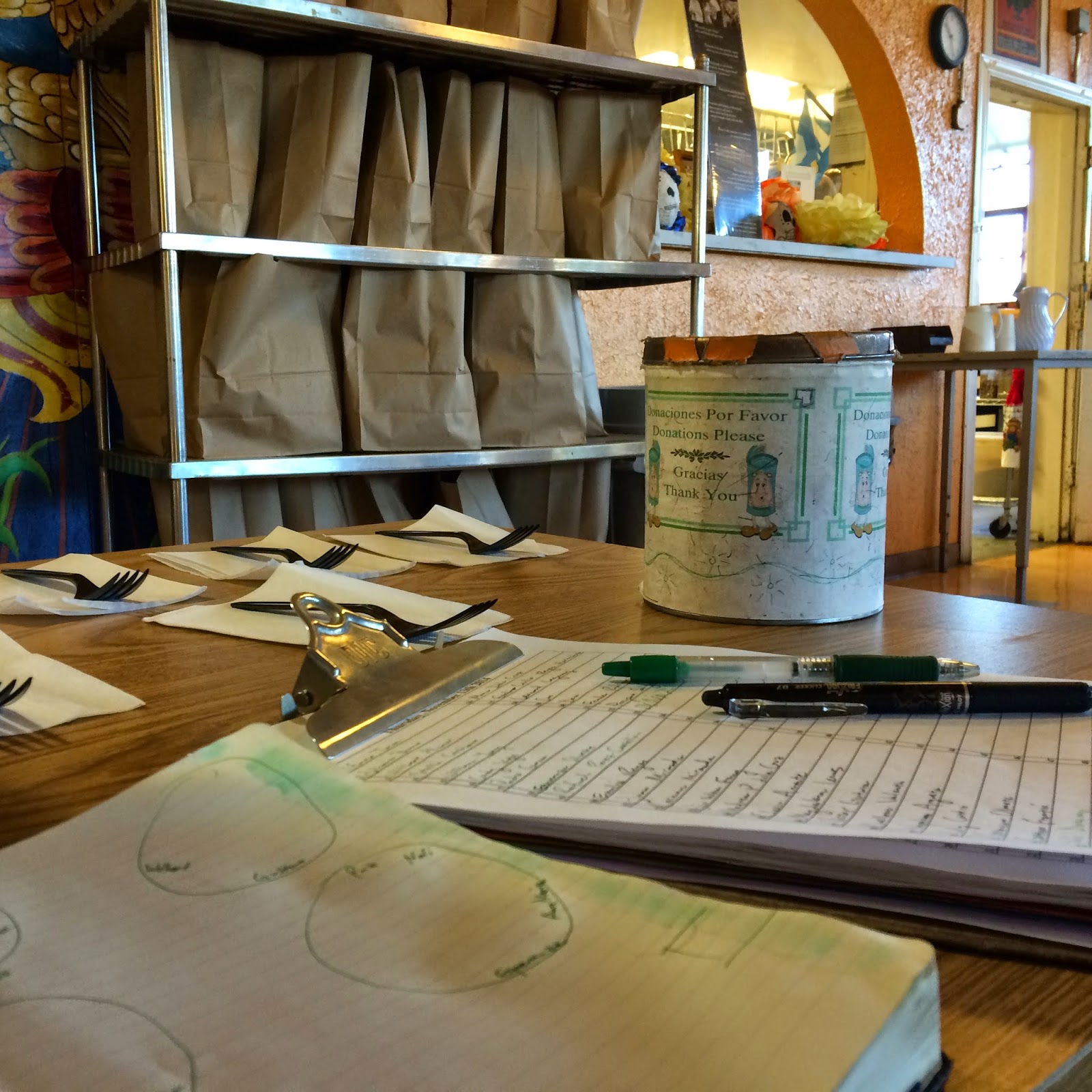
A drawn seating chart to help recall names, a check-in pad, and a free-will donation tin.

This is an ongoing series in self and service evaluation. In these posts I utilize analysis questions, reflection approaches, and rubrics that I have gathered over several years of teaching university level Service-Learning courses and apply them to my own service experiences in Seattle, Washington. I am putting my methods under their own microscope. Rubber, Meet Road.


Nobody has a phone.

Ok, I have a phone. And two other people have phones. We are the youngest in the room and stick out like sore thumbs. They accompany their elderly family members to senior lunch and whip out a phone occasionally; one keeps a single earbud in at all times.

The room is not full of longtime friends, but you’d be forgiven for making that assumption based on the hum of voices echoing around the El Centro basement. The majority only knows each other from lunch here. Among other things this leads me to think about how the absence of technology has affected and continues to affect their relationships in this time. Could a room of millennials sit at tables, wait for food, and for an hour each week get to know each other? I assume it would look more like a prayer circle: heads down silently regarding their (de)vices. What I see at El Centro’s senior lunch seems to be an increasingly rare tableau in our day and age.

In the conversation on power and privilege, I find myself more acutely aware of how much of both of these I have acquired or was handed at birth, and more often I’m sensitive to the stale backwash that technology leaves in my system, particularly as I approach others. I rarely sit through a meal without using my phone or without several people at the table placing theirs on the table alongside their food. How symbolic. Sustenance adjacent to sustenance. One ingested to give and replenish energy necessary for life, the other an inorganic drain on energy, ejecting us from conversation and presence into the cloud where it’s too thick to see faces.

My phone has trained me to multitask. Late last year I discussed with a friend (@whenwherehowe) his New Year’s resolution to stem the tendency to follow twitter while reading a book, watch a show while looking up all the actors in IMDB, and other habits of our time. I think this was a discerning approach to deal practically with technological fatigue. It highlights a reality that I hadn’t yet appreciated, which is that I am always, forever multitasking when I have the opportunity to receive a text or call while talking or dining or biking with others. I am available to be pulled away from reality into parallel, floating interfaces that are necessarily more pale in comparison to the colors of presence.

I’m trying to remember my early years of college before smart phones came around. I held out for many years, but in September 2012, I ditched my flip phone for the iBrain. It’s not true that something died then, but I think it’s fair to say something decelerated growth in subsequent months and years. This thanksgiving, we’ve been pondering placing a phone basket by the front door for our guests and selves. I wonder how that will feel.

To steer this back to the seniors and El Centro, there is truth in what I see around those tables. There is presence, and it must have something to do with both the generational gap and the shrinking gap between life and death for many of them. Who has time for twitter when dementia is setting in and your grandkids have to remind you of their names at check-in? At El Centro, I put my phone away for shame. They don’t have time for such nonsense.

The buzzing room holds up a fine microscope to my (de)vice. It’s time I looked into it.

This entry grew out of the analysis question, “How are differences of power and privilege visible in your service?” From there, I thought of the power of technology and the inversion of that power dynamic as seen in the folks without it.

RMR Vol. 1: Day 1 at El Centro de la Raza


These are the same words as in the previous post, but I’m copying them again for cohesiveness in my Rubber, Meet Road series of posts.


I found El Centro months before moving here. It was ubiquitous in many a job search given my criteria and clearly a prominent–if not preeminent–center for the Latino community in King County. I got into a volunteer orientation about two weeks after arriving, and since that first meeting became more than convinced that I was going to spend much time there.
The subtitle of the organization is “The Center for People of All Races”, which can seem a bit incongruent with the name itself. Nonetheless, I have found this to be true in my one day, four hour shift volunteering with the seniors and homeless meals program. Here are some of the moments that I remember:
A woman of Asian heritage sitting with her friends brought me a piece of bread while I was signing in those arriving for lunch. Her name was Li Bueno. Lunch had not been served yet, so this bread must have been from home. I thanked her.
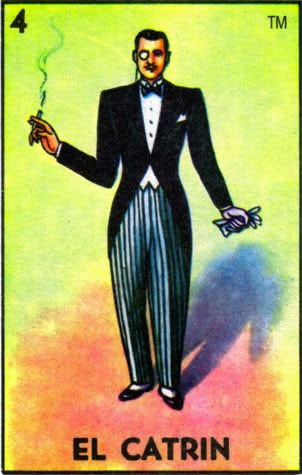
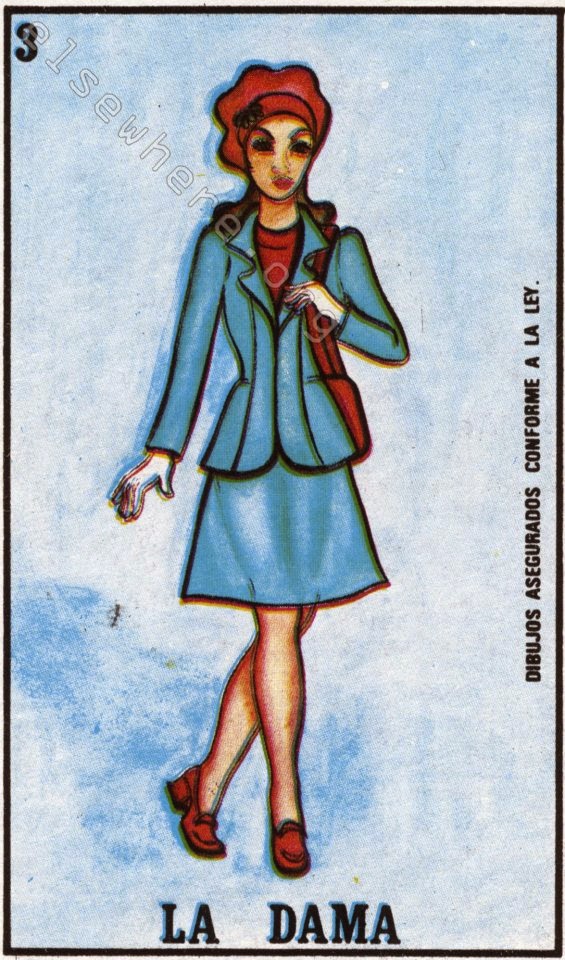
Lotería is a like a Latin bingo. It’s simple and social. The main difference has to do with the “numbers”. In lotería, the cards have household objects, fruits, caricatures, musical instruments, or the moon on them. I lead a couple of the rounds. As leader you call out the card that is drawn in Spanish and English. Everybody helps each other hear and find the right spot that was called. There is a bit of banter in between the leader and players, too. So when I called “El Catrín” (“The Gentleman”, as Raquel translated it in an earlier round), several of the women called back at me. “Eres tú, Aaron!” (“That’s you, Aaron!”). “Nooooo, I don’t smoke!” The next card was “La Dama”. “This one’s me!” They all laughed.
There is more than one concerning card in lotería for the nature of the caricature. Here’s the most difficult one.
While El Centro program director Raquel was leading the first round, I was paying close attention to the translations and was already anticipating how she might articulate this particular image. I was thinking to myself whether I would want to play this game at all because of the weight of some of the racial tone-deafness contained in some of these images. Raquel translated it as “The Dancer”, which…ok that’s a pretty flat way to skirt racism. Is that a dancer? Ok. Yeah, I guess it could be that. It’s just not called “The Dancer” or anything close in Spanish.
Lunch is held in a room full of seven circular tables with eight chairs each. After serving everybody, I was given a plate to sit down with. I can’t say what the conversations were like in the rest of the groups or what they’re like on any other day at El Centro, but this table I sat at was eye-opening. You might not think a Latino man and a black woman have much to talk about, but get on the subject of poverty, equal treatment, and social justice and they’re knee deep in commonality–at least that’s what I observed at the table. They spoke of their experiences in hospitals, state offices, and other service-oriented environments. The rest of the table gave consenting head nods if not words. She even addressed me as a person who probably doesn’t suffer much of what they are discussing. She wasn’t wrong, and I actually appreciated her pointing it out. If we are willing to use the words “under-privileged” to describe sectors of the society, why do we balk at calling ourselves “privileged”? What’s clear is that class struggle, race, and equality are not #ferguson conversations. They are everywhere. These things were cut short by a hard right turn to Kennedy assassination theories. Made me think about being in my 60s and discussing 9/11 around a table where a kid who’s only read about it in history books is rolling his eyes at how damn old we all are.
Here is a statement of intent:
I will blog about these times. There is richness in them. For years, I’ve been teaching Service-Learning courses in which I instructed students in how to analyze and decode their volunteer experiences to extract meaning from them. I need to do this myself as well if I am planning on not just helping but serving. To serve is to receive as much as you give. Helping happens when one person has power and another does not; service happens within a relationship of equals, where no power or privilege dynamic is in play. It’s time I take these ideas and apply them to my own volunteering to see what I can unearth. Rubber, Meet Road.

El Centro de la Raza: day 1 and a statement of intent

I found El Centro months before moving here. It was ubiquitous in many a job search given my criteria and clearly a prominent–if not preeminent–center for the Latino community in King County. I got into a volunteer orientation about two weeks after arriving, and since that first meeting became more than convinced that I was going to spend much time there.
The subtitle of the organization is “The Center for People of All Races”, which can seem a bit incongruent with the name itself. Nonetheless, I have found this to be true in my one day, four hour shift volunteering with the seniors and homeless meals program. Here are some of the moments that I remember:
A woman of Asian heritage sitting with her friends brought me a piece of bread while I was signing in those arriving for lunch. Her name was Li Bueno. Lunch had not been served yet, so this bread must have been from home. I thanked her.
Lotería is a like a Latin bingo. It’s simple and social. The main difference has to do with the “numbers”. In lotería, the cards have household objects, fruits, caricatures, musical instruments, or the moon on them. I lead a couple of the rounds. As leader you call out the card that is drawn in Spanish and English. Everybody helps each other hear and find the right spot that was called. There is a bit of banter in between the leader and players, too. So when I called “El Catrín” (“The Gentleman”, as Raquel translated it in an earlier round), several of the women called back at me. “Eres tú, Aaron!” (“That’s you, Aaron!”). “Nooooo, I don’t smoke!” The next card was “La Dama”. “This one’s me!” They all laughed.
There is more than one concerning card in lotería for the nature of the caricature. Here’s the most difficult one.
While El Centro program director Raquel was leading the first round, I was paying close attention to the translations and was already anticipating how she might articulate this particular image. I was thinking to myself whether I would want to play this game at all because of the weight of some of the racial tone-deafness contained in some of these images. Raquel translated it as “The Dancer”, which…ok that’s a pretty flat way to skirt racism. Is that a dancer? Ok. Yeah, I guess it could be that. It’s just not called “The Dancer” or anything close in Spanish.
Lunch is held in a room full of seven circular tables with eight chairs each. After serving everybody, I was given a plate to sit down with. I can’t say what the conversations were like in the rest of the groups or what their like on any other day at El Centro, but this table I sat at was eye-opening. You might not think a Latino man and a black woman have much to talk about, but get on the subject of poverty, equal treatment, and social justice and they’re knee deep in commonality–at least that’s what I observed at the table. They spoke of their experiences in hospitals, state offices, and other service-oriented environments. The rest of the table gave consenting head nods if not words. She even addressed me as a person who probably doesn’t suffer much of what they are discussing. She wasn’t wrong, and I actually appreciated her pointing it out. If we are willing to use the words “under-privileged” to describe sectors of the society, why do we balk at calling ourselves “privileged”? What’s clear is that class struggle, race, and equality are not #ferguson conversations. They are everywhere. These things were cut short by a hard right turn to Kennedy assassination theories. Made me think about being in my 60s and discussing 9/11 around a table where a kid who’s only read about it in history books is rolling his eyes at how damn old we all are.
Here is a statement of intent:
I will blog about these times. There is richness in them. For years, I’ve been teaching Service Learning courses in which I instructed students in how to analyze and decode their volunteer experiences to extract meaning from them. I need to do this myself as well if I am planning on not just helping but serving. To serve is to receive as much as you give. Helping happens when one person has power and another does not; service happens within a relationship of equals, where no power or privilege dynamic is in play. It’s time I take these ideas and apply them to my own volunteering to see what I can unearth.

Gravel Worlds 2014

I sit here some 48 hours removed from my Gravel Worlds experience. Head is swimming, body buzzing pleasingly, grammar uninteresting.

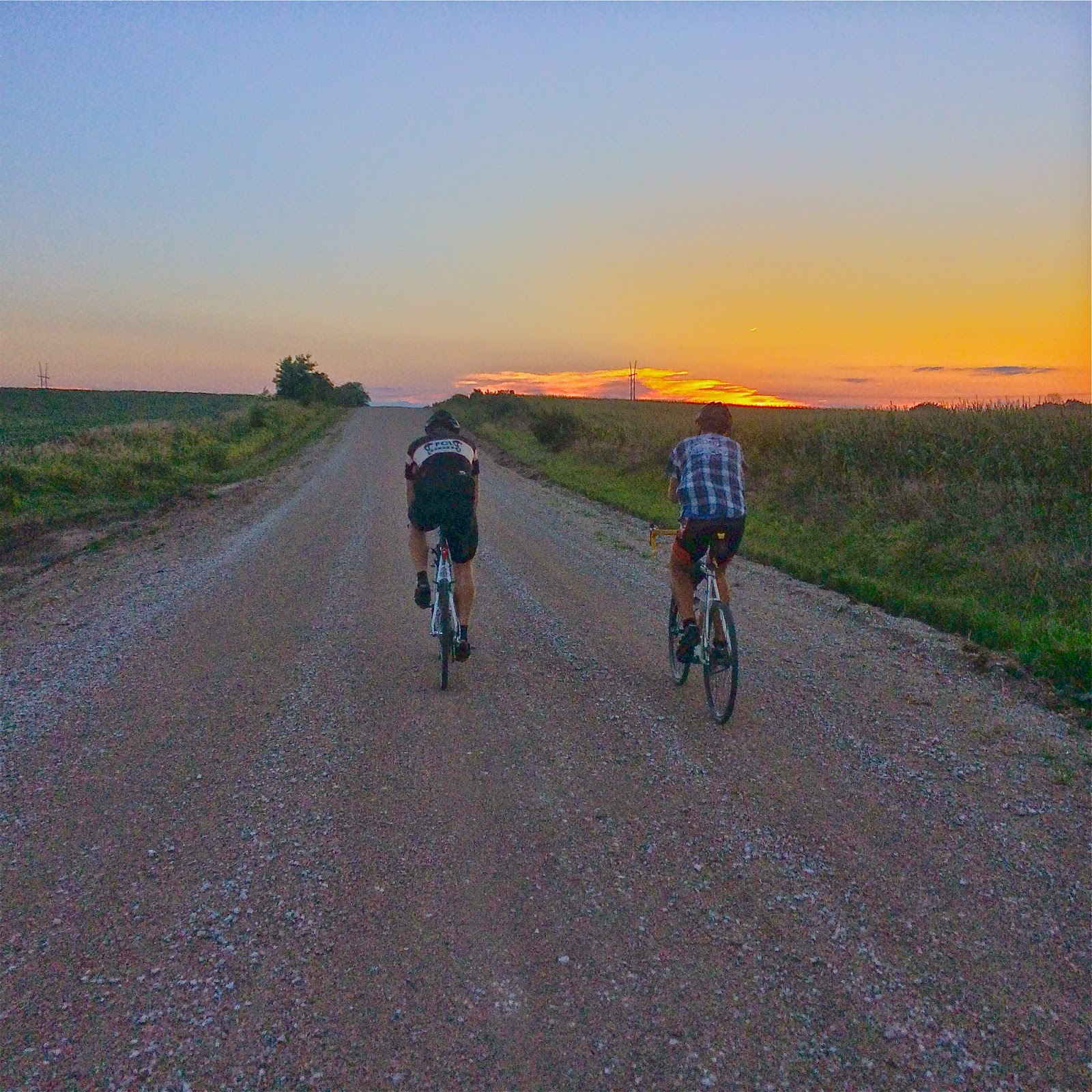
Leading up to the race, I honed a mantra: “low expectations, high hopes, might finish”. You see, I heard many stories directly out of many friends’ mouths about how much their first Worlds hurt them, about how they made it 80 miles and had to phone for a ride. There are also certain aches and pains that only 150 miles of gravel roads will reveal, so be ready to hurt in new and unexciting ways, I was told. These and other cautionary talks are a big part of why I’ve felt so stupid happy since feeling the last of 153 miles melt away beneath my legs on Saturday.

About those legs: they are sun-scorched, they carried granite and limestone strata, they move now with a gratifying groan, they carried the day.

Here is what I remember:

1. Didn’t need the 4:30 alarm–was well awake before. Josh Rice arrived at 5:10 to shuttle Austin and myself.
2. Rode first 15 miles amongst friends, next 40 with Berly to Garland. Others like Amen, Pedley, J.D., and Tim had joined up by the time we rolled into Malcolm (66 miles).
3. At the Malcolm stop, I reassessed my goals and decided that I needed to take extremely short breaks the rest of the way if I was going to finish by sunset, so I set off alone for the next 63 miles until Hickman.
4. Rode with Kat part of the way to Hickman, seesawed with Carnes and McLaughlin a bit. Stuck to my commitment of spending less than 10 minutes at the checkpoints and oases–enough to refill water and Kobayashi a polish dog, pickle, or whatever salty foods were available.
5. At 90 miles, a dormant right knee suddenly got angry. It hasn’t hurt like that since its 2002 reconstruction surgery. The upper/inner corner hissed with every stroke, and I began to ask myself if I could go another 60+ miles. Speculating that the root of the problem was my foot angle, I adjusted it to be slightly more pigeon-toed. The self-diagnosis worked; the pain disappeared after 3-4 miles never to be felt again. Amazing.
6. Passed Rhino and Russell leaving as I arrived at the winery oasis (114 miles). If I could catch them, I thought, it would make a perfect home stretch out of the last 40 miles.
7. They were lingering at the gas station when I rolled into Hickman (129 miles) where we were also caught by Kat. The four of us (two geared, two SS) churned out the last 25 together.
8. With one mile left we were swarmed by 4-5 others, including Carnes and McLaughlin, to make an 8-way tie for the finish time of 14 hours and 14 minutes just as the sun was disappearing at 8:29pm.

All day, I kept the hope of finishing in the forefront of my thoughts: the feeling of lying down in the grass and drinking a most satisfying beer, of high-fiving other finishers, and of having ridden 70 more gravel miles than I’d ever done at once. I have not been disappointed. It feels as if I have my own personal BCE/CE crossover. There was a before Gravel Worlds, and now there is an after. There were guesses, and now there is certainty. There was a question mark, and now there is an answer.

So what did I take from this?

As far as bicycling goes, a ton. I learned to ride my own race and be patient. I learned to stick to my goals and my plan even if it meant I jumped ahead or slipped behind a friend group. I learned I have a lot more endurance than I knew. I am amazed to say I never felt like I was digging very deep, which makes me think I could have gone harder and faster.

As for life takeaways, finishing Gravel Worlds comes at a particularly momentous time when many existential questions are asking themselves. I refer to my impending move to Seattle next month, which I’ve described previously as a “throwing of my life to the mercy of the wind”. With so many unknowns looming I approached Gravel Worlds as not only a thoroughly romantic farewell to my prairie homeland but as a 153 mile if-then statement to myself. If I can do this thing I am afraid of not being able to do, then […].

Last takeaway is the unbelievable community that I have found in 5-ish years of Lincoln Hustle, nacho rides, BicycLincoln, and Cycle Works. The experiences that lead me to this moment are myriad, but I can put a finger on the spontaneous combustion of the summer of ’09 and the fine friends that continue to orbit this city and bicycles in what feels like my own personal Big Bang.

Thanks, all, for reading and being a part of that.

Three cheers! Three tears! Dust to dust! Dusk to dusk!

The tree with the lights out of it

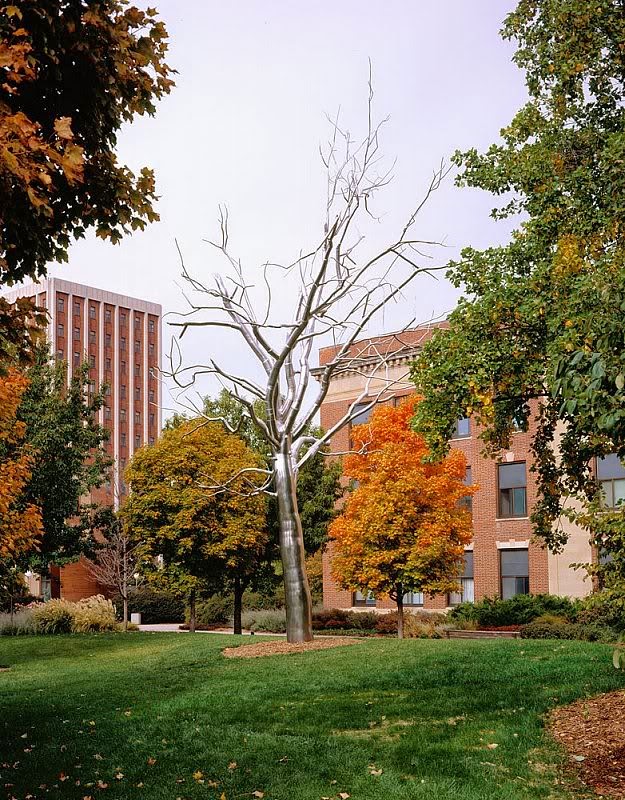
“It’s called ‘Breach’ and was installed in 2009. It’s a pretty neat sculpture because–“

And there is as far as I could ever get. I couldn’t finish the sentence, and this annoyed me endlessly because filling in the “because” of aesthetic appreciation is super fun. I remember a friend once asking, “Why do you always have to know exactly why you like something?” The coy answer would have been “Because I like to.”
A couple weeks ago I found myself again reflecting on the significance of the sculpture, finding that my deepest reach into thought was inches away from the kernel I sought. When I brought it up a friend commented, “It’s neat because in different seasons it means different things.” After a few days of chewing on it, this turned out to be the thought I had been missing.
The sculpture of the tree is stagnant and lifeless. It is passive to the surrounding space. It is inorganic, and seen through the changing seasons it offers a mirror to the rest of the world around it. In its lifelessness, it calls into focus the splendor of the organic. In this way, it is a sculpture not of a tree but of all the other trees. In this metallic tree we see reality reflected that much more fully. The real, life-giving branches nearby gain more reality due to the juxtaposition of these metal ones. We don’t need this metal tree to know the other trees are real, but without it maybe we notice them less. Maybe we care less. Maybe we miss one of those sweet moments of gasping at spring or the flush of fall.
So I arrived at my because, and while there may be more to unearth from this idea, I’m happy to have found the source for more reflection. There’s also a great connection here with Saussure’s ideas of the sign and stuff I haven’t thought about since early grad school. Much more to chew on!

Since I’m on the subject, please enjoy this tree-awe from Annie Dillard: 

A big elm in a single season might make as many as six million leaves, wholly intricate, without budging an inch; I couldn’t make one. A tree stands there, accumulating deadwood, mute and rigid as an obelisk, but secretly it seethes, it splits, sucks and stretches; it heaves up tons and hurls them out in a green, fringed fling. No person taps this free power; the dynamo in the tulip tree pumps out even more tulip tree, and it runs on rain and air.

Tax Happy

She is a soft-spoken woman with a beautiful, seven year-old daughter and a hardworking husband. Together Lucia and Esteban make enough to have paid off their home in the 10 years they’ve been together. We exchange a joke as the cautious tax preparer ponders how to enter their double last names. You can tell they are happy people.

“Es que aquí se pierde el apellido maternal y se mantiene solamente el paternal del marido.”
(Here you drop the maternal last name and keep just the husband’s paternal last name)

“¿Esto no es sexista?”
(Isn’t that sexist?)

She laughs, and so Esteban and I realize we can too. You can tell they are happy people, except maybe for on this day: they’ve come to pay their taxes again.

I’ve done their return more than once before, and it never ends well. This year I will be their interpreter. What I remember is the pale look of resignation. They know the ending to the story and yet it must be read aloud to them anyway. Lucia and Esteban owe the IRS several thousands of dollars every year. Esteban is a contracted drywall installer, and as a self-employed laborer does not have any taxes withheld from his paychecks. Instead, he gets hit with a wrecking ball of ~$5,000 self-employment tax each year. This year, we talk about making estimated payments for 2014 to hopefully stay ahead of the game, but there’s little money for estimated future payments when you’re still paying off 2012’s $9000 tax debt.

Here’s the hook: Lucia and Esteban are undocumented workers (i.e. illegal immigrants). They have each lived 20+ years in this country, and although they dutifully file their tax returns yearly they have no hope of ever becoming citizens without a reform in the immigration process. They apply yearly for residence, and then, when turned down, they file their taxes again. They pay thousands year after year into programs such as Social Security and Medicaid that they will never benefit from.

Lucia’s voice softens a bit as she explains: “Nos dijeron que había mucho movimiento positivo en la política de inmigración…que iba a haber reforma el año pasado.” (They said there was a lot of positive stuff happening for immigration policy…that there would be a reform last year.)

There at the end of that phrase is the key: last year. Speaker Boehner, as of February 6th, 2014, has already shelved the idea of pursuing reform this year, too. When these model non-citizens are responsibly filing their taxes in a country that continues to refuse to recognize them (unless we need their $), what’s the point? You may ask why they are filing at all. It’s to be in good standing while hoping for a reform that would possibly provide them a pathway to citizenship, allowing them the benefits they are denied now based on a technicality. I say technicality (legal status) because they are as citizen-like as any of us. They own a home, their kids go to my neighborhood schools (for which they pay property tax), they live down the block from me, Lucia works at a restaurant I frequent, they bought a new car last year. You know: America, right?

The three of us are talking about all of this as the preparer tries to find the box for Mexican residency, and it seems appropriate to pause to say something I don’t know if I’ve ever put into words: “En caso de que nadie les haya comunicado esto antes, les quiero decir honestamente que les quiero aquí en este país y en mi comunidad. Uds. son una parte importante de mi ciudad.” (In case no one has ever said this to you before, I must tell you honestly that I want you here in this country and in my community. You are an important part of my city.)

Was I saying it for me? To say to the face of an actual person what I have long believed to the point of tears?

Lucia and Esteban take their stack of papers; we shake hands and exchange wishes to see each other again next year. Esteban smiles: “Este año dono todos mis ingresos a la iglesia a ver qué pasa.” (This year I’ll give all my income to the church and see what happens.)

You can tell they are happy people.